This glossary contains words of reference to the topics seen in analysis of architecture II and during the English part of the subject, with the theme of construction and urbanization.
Air-Entrained Concrete
Noun
It is when the air contained in the concrete is dispersed in the form of tiny spherical bubbles, connected to each other only by very small channels called pores, through which water escapes during the drying of the concrete and after curing.
Example: The air-entrained concrete is dispersed in the form of tiny spherical bubbles, connected by channels called pores.
en: Concreto con Aire
Architectural Concrete
Noun
It is a material that, in addition to meeting structural and mechanical specifications, offers the possibility of giving personality to a work, combining pigments on additives to achieve different tones, textures, shapes and finishes.
Example: Water curing is not recommended for architectural concrete.
en: Concreto Arquitectónico
Asphalt
Noun
Asphalt is a natural substance that began to be used as a building material in ancient Mesopotamia. We know from books such as the Old Testament that its waterproofing properties helped caulk ships. Today almost all the asphalt we use is artificial.
Example: Asphalt is a natural substance that began to be used as a building material in ancient Mesopotamia.
en: Asfalto
Asphaltic Concrete
Noun
Asphalt concrete is a material composed of aggregates embedded in an asphalt cement matrix that fills the space left by the aggregates and binds them together. The asphalt cement remains flexible and provides structural integrity by covering the aggregates and giving the mix cohesive properties.
Example: Asphalt concrete is a composite material commonly used for paving roads.
en: Concreto Asfáltico
Axes
Noun
Lines that relate those cities that maintain intense relationships of all types.
Example: Then, running shoes, axes, racing karts and animatronics.
en: Ejes
Brew
Noun
Casting is the on-site fabrication of a reinforced concrete slab, with a thickness of 8 to 10 cm, which is reinforced with ¾-inch steel rods. It is supervised by an architect.
Example: In a brew, water, cement and sand are needed.
en: Colado
Brick Courses
adjective
A 'course' is a measurement referring to the dimensions of the brick AND mortar when they have been sandwiched together. One brick and the mortar together is equal to one 'course'.
Example: A single sized course of bricks is approximately 20 cm (8 inches) high.
en: Cursos de Ladrillos
Building
Noun
It is a fixed construction that is used as a human dwelling or that allows the realization of different activities. The etymological origin of the term is related to "to make fire", since the first human constructions were intended to protect the fire (to prevent it from being extinguished by wind or rain).
Example: The structural elements of a building are usually: floors, columns, walls and beams.
en: Edificio
Cellular Concrete
Noun
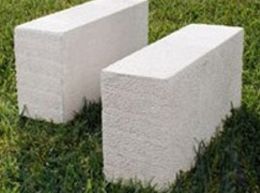
Aerated concrete is a special type of lightweight building material produced in the form of blocks or panels used for the construction of residential or commercial buildings.
Example: Cellular concrete is created by including a multitude of micro bubbles in a cement-based mixture of sand and other silica materials.
en: Concreto celular
Column
Noun
These are vertical elements of great structural importance in any building. Their function is to support bending and compression stresses caused by the elements they support or by natural forces such as earthquakes, wind, among others, to transmit them to the foundation.
Example: Columns have an internal slab that ensures their stability and prevents the column from disfiguring.
en: Columna
Concrete
Noun
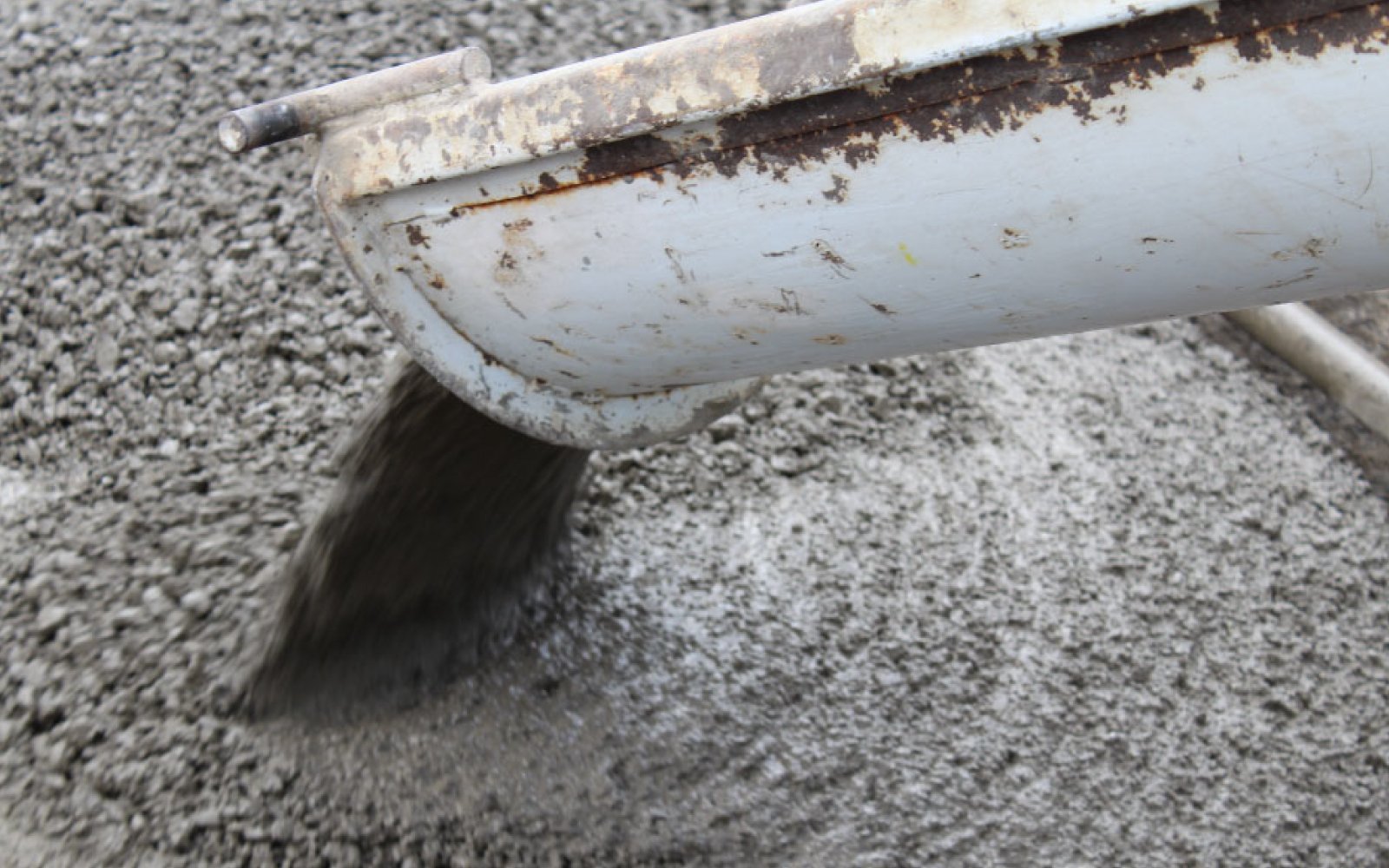
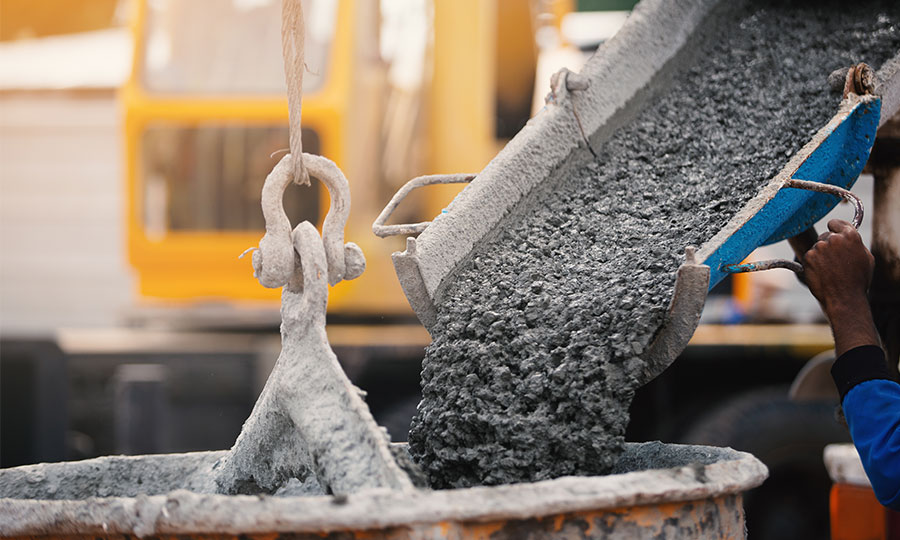
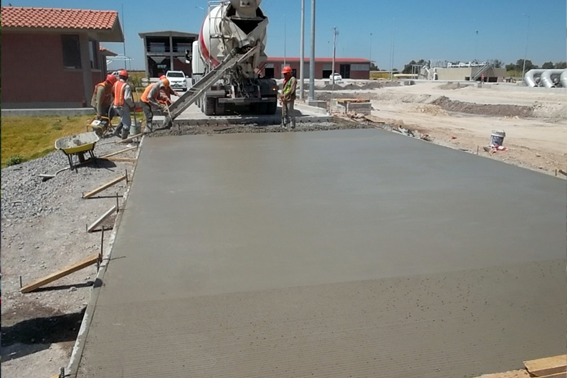
Concrete is a mixture of stones, sand, water and cement which, when solidified, is one of the most resistant construction materials used to make foundations and walls. The combination of sand, water and cement in some Latin American countries is known as mortar, while when the concrete is compacted in its place it is called concrete.
Example: Concrete is a mixture of materials such as sand, gravel and gravel (also called aggregates), and cement, which serves as a binder.
en: Concreto
Concrete Block
Noun
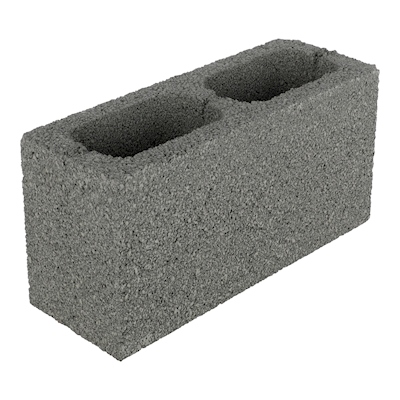
Concrete block is a precast material used primarily for building walls. Like common bricks, the blocks work together by being stacked and joined with mortar generally consisting of cement, sand and water. To accomplish this bonding, the blocks have a hollow interior that allows for the passage of steel bars and mortar filler.
Example: Concrete blocks are mainly used as a construction material in the manufacture of walls.
en: Bloque de Cocreto
Copper
Noun
Copper is a soft, shiny, reddish-brown metal that is a good conductor of heat and electricity. It is one of the most important metals in the metallurgical industry.
Copper is a metal widely used in the manufacture of cables, power lines, coins, keys, musical instruments (brass), cell phones, jewelry, among others.
Example: Copper is a good electrically conductive material.
en: Cobre
Cured Concrete
Noun
The process by which concrete made with hydraulic cement matures and hardens over time as a result of continuous hydration of the cement in the presence of sufficient water and heat.
Example: Curing concrete is a process that consists of spraying water on the surface of the concrete.
en: Concreto Curado
Edges
Noun
These are linear elements that are usually boundaries between zones of different classes, they can also be represented by walls or panels.
Example: As much as we have tried to avoid it, we would have to return to a border with controls.
en: Bordes
Exposed Concrete
Noun
Exposed concrete is a mixture of gravel, cement, aggregates and water whose finish is that offered by the material itself.
It is a construction material that serves both as an enclosure and as a structural element. Its degree of quality depends to a great extent on its formwork, since it has to be visually adapted to the needs of the projects.
Example: Exposed concrete is an element that has usually been used for the construction of large structures and civil works.
en: Concreto visto
Flatenned
adjective
The term wall flattening is a technique that consists of applying a mixture of cementitious material with an aggregate to the vertical elements (walls) and horizontal elements (soffits) of a construction.
Example: Flattening is to cover or correct faults and protect building materials from deterioration over time.
en: Aplanado
Floor
Noun
A floor is the bottom flat horizontal surface of a building. In order for the floor of a house to efficiently fulfill its function, it must be waterproof, resistant, hard and smooth.
Example: The floor is very firm.
en: Piso
Gravity Load
Adjective
Gravity loads are body loads that simulate the force of gravity as it affects the model. When a gravity load is defined, the components of gravitational acceleration in each coordinate direction are specified. A negative value is opposite to the coordinate direction.
Example: The gravity load allows us to know the loads that are exerted on the different structural elements that make up the construction.
en: Carga de Gravedad
Green Concrete
Noun
It is a general purpose gray cement with an addition of artificial pozzolans in the production process, thus achieving the reduction of CO2 emissions compared to the manufacture of a general purpose cement.
Example: Green concrete uses waste and recycled materials as ingredients.
en: Concreto Verde
Insulating Concrete
Noun
Monolithic insulating concrete powder is a composite of mineral wool and inorganic binders, resistant to high temperature. The addition of water (no Portland cement combination is required) will result in a moldable plastic mass that can be used as a finishing mortar.
Example: The insulating concrete has a low thermal conductivity, containing a foaming agent that gives it a cellular structure.
en: Concreto Aislante
Journeys
Noun
Distance traveled between two places and the action of carrying out such travel, it can be traveled through a consistent or voluntary displacement.
Example: Travel distance can be doubled by switching to a second battery under the seat.
en: Trayectos
Masonry Ties
Noun
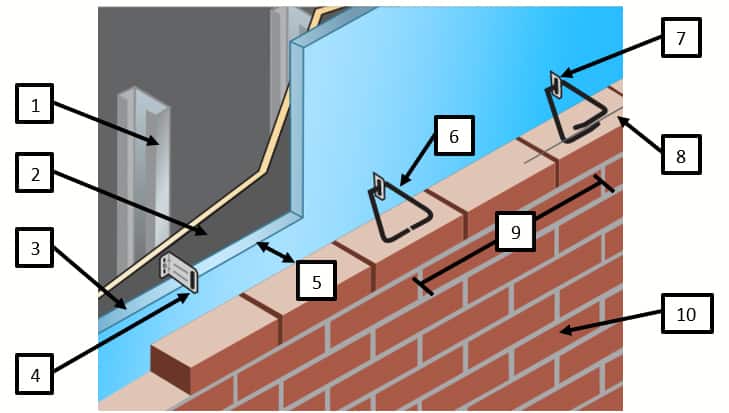
These ties are used to connect multiple masonry beams, often of different materials; anchor masonry veneer to non-masonry backing systems; and connect composite masonry walls.
Example: Masonry ties are effective for connecting walls.
en: Lazos de Albañilería
Metal channel
Noun
It is a metallic structure whose manufacture is made with galvanized sheets. There is a wide variety of sizes and different gauges to carry out your construction project.
Example: In my house, a metal channel was used to fix dividing walls to the floor.
en: Canal metálico
Metal decking
Noun
They are another variant of decking, different from those made of wood and plastic, with specific applications.
Example: Metal decking used, above all, in the metallurgical and automotive industry.
en: Tarima metalica
Metal framing
Noun
Any structure in which the majority of its parts are metallic materials.
Example: The supermarket has a metal framing.
en: Estructura metálica
Metal grating
Noun
It is a reticular structure made up of load-bearing slabs joined orthogonally by transverse elements. The great versatility and aesthetics have diversified its use for all kinds of applications within the Industry and Construction. Its great resistance combined with a low specific weight, easy installation or a minimum maintenance requirement, are just some of the characteristics for which professionals trust this product to guarantee optimal results.
Example: A brush should be used to clean the high voltage metal grid.
en: Rejilla mtetálica
Metal panel
Noun
They are sheets placed vertically that protect or define a space. They have the function of protecting the interior of the warehouse and distribute the wind load to the Facade stringers.
Example: The facade of my house has a metal panel.
en: Panel metalico
Metal rod
Noun
A bar is a piece longer than thick, made of metal, wood or other material, which usually has a cylindrical or prismatic shape.
Example: The protection of my window is made of metal bars.
en: Varilla metálica
Metal roofing
Noun
They are effective for excellent heat conduction and reflect the sun's rays.
Example: The party venue has a metal roofing.
en: Techos metálicos
Metal stud
Noun
Metal part that is part of some type of mechanical device and is used to hold or support one or more parts of the mechanism itself.
Example: Today I went to buy metal stud.
en: Perno metálico
Metal tubing
Noun
Conductors and cable protection accessories made of metal.
Example: Tomorrow I will go to the construction site to learn how metal tubing is used.
en: Tubería metálica
Milestones
Noun
They are reference points that are recognized by everyone in a site, they are elements that are seen and differentiated from the nodes, because they are not penetrated.
Example: This month it passed an important milestone.
en: Hitos
Neihbord
Noun
They emphasize the formation of a distinctive physiognomy and morphology, which in their individuality, the conjugation of one or more priority activities, which allow the development of a certain autonomy and functionality.
Example: A house in a residential area or district or neighborhood (U.S.)
en: Barrios
Node
Noun
These are meeting points such as: street crossings, squares, traffic circles or roundabouts.
Example: A node is the union of two or more elements.
en: Nodo
Paths
Noun
They are the conduits that allow the inhabitants to observe the city through them, they must be identifiable.
Example: This is not an argument for not providing cycle paths or engineering roads in favour of cyclists.
en: Sendas
Plots
Noun
It is composed of shapes and spaces whose position in space and their interrelationships are regulated by a type of frame or by a three-dimensional field.
It is composed of shapes and spaces whose position in space and their interrelationships are regulated by a type of frame or by a three-dimensional field.
Example: You can dismantle the preposterous plot with a small spanner.
en: Trama
Porous Concrete
Noun
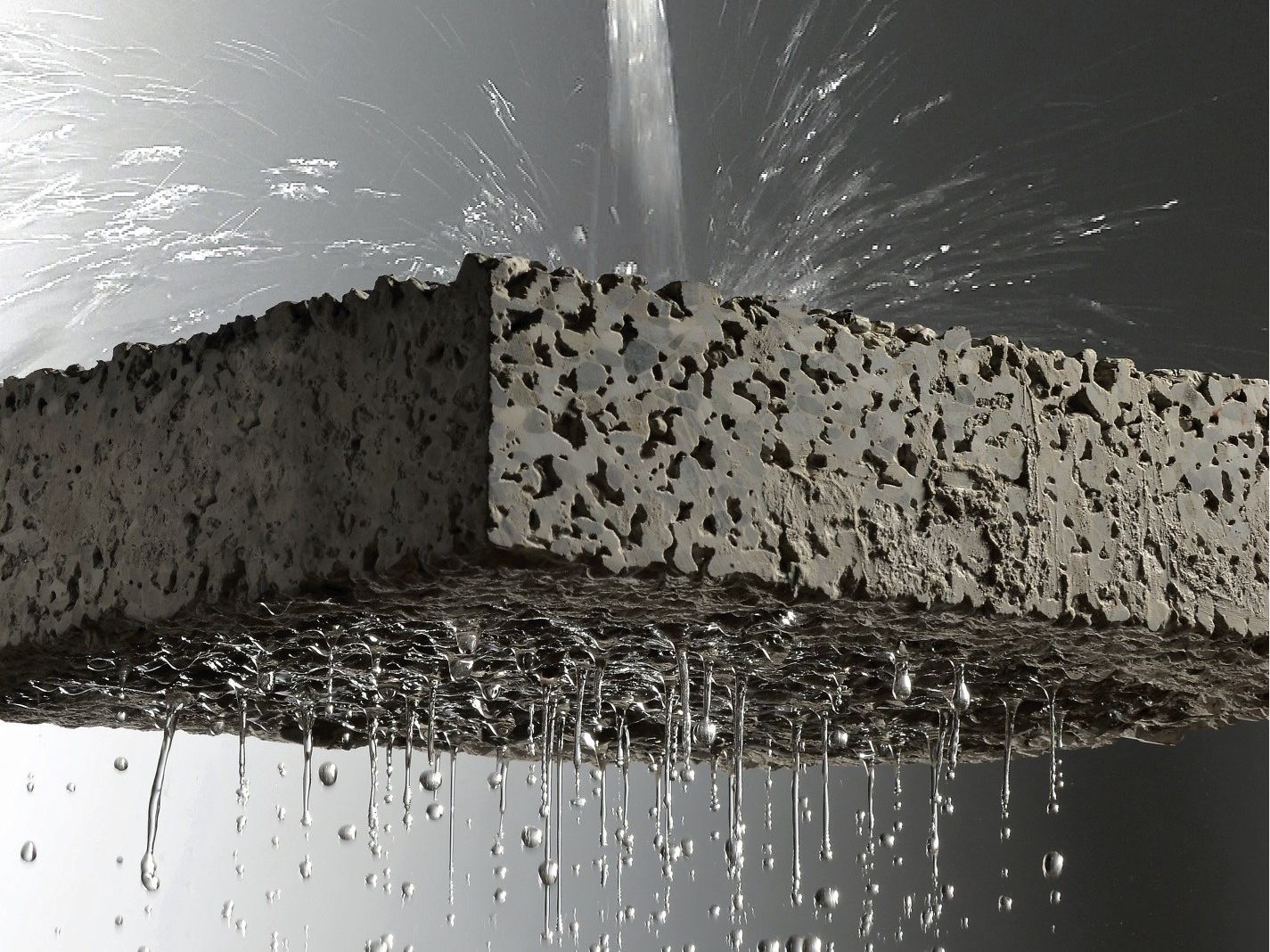
It is a compound of cement, coarse aggregate, water and additives, which, when mixed, is used to manufacture totally permeable floors and pavements.
floors and pavements that are totally permeable.
The low presence of fine aggregate gives the concrete a porous structure, allowing water to pass through the structure, thus reducing the surface accumulation of water.
water to pass through the structure, thus reducing the surface accumulation of rainwater.
Example: The main characteristic of porous concrete is to allow the passage of water.
en: Concreto Poroso
Precast Concrete
Noun
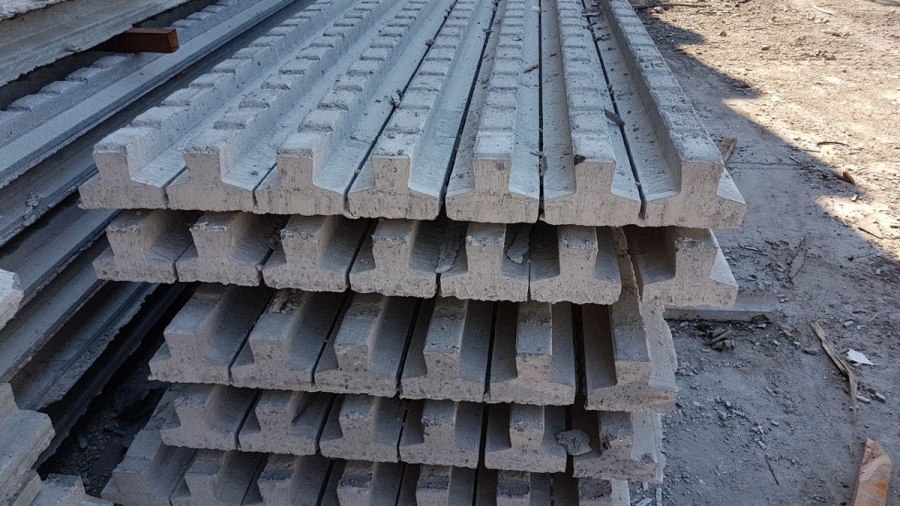
Precast concrete is a construction material obtained by mixing, pouring, and curing concrete in reusable molds of a given geometry under controlled environmental conditions.
The resulting material will be transported to the construction site to be assembled according to certain guidelines to form a structure.
Example: Precast concrete, therefore, is an industrialized solution for the construction of any type of civil building.
en: Concreto Prefabricado
Prestressed Concrete
Noun
Prestressed concrete is a concrete variant that consists of applying an initial compression in the concrete before the external load is applied so that the tension of the external loads is counteracted in the most desirable way during the service period. This initial compression is introduced by high-strength steel wire or alloys (called "tendons") placed in the concrete section.
Example: Prestressed concrete has a higher resistance to oxidation.
en: Concreto Pretensado
Reinforced Concrete
Noun
Reinforced concrete is essentially the improved version of plain concrete, since it overcomes certain mechanical limitations of the original material (concrete), however, it does so at the cost of generating new construction and maintenance limitations and inconveniences.
Example: Reinforced concrete is a composite material that conventionally results from the incorporation of steel bars or mesh in the concrete mass.
en: Concreto Reforzado
Relief Angle
Noun
The angle of incidence (or point of incidence) is the point of reflection where the normal of light is located on some concave or convex reflective object. A convex mirror is a spherical mirror and images can be observed in reverse.
Example: I know where the light is reflected by the angle of relief.
en: Ángulo de Relieve
Shelf Angle
Noun
A shelf angle or masonry support is a steel angle that supports the weight of the brick or stone veneer and transfers that weight to the main building structure so that a gap or space can be created underneath to allow for building movements. to occur.
Example: The shelf angle measures 24 cm and has a height of 30 cm.
en: Angulo de Estante
Sideways
adjective
A system of projection by which a three-dimensional object is represented by a perspective drawing in which the faces parallel to the picture plane are drawn to true scale and all lines perpendicular to the picture plane have any slope other than 90°, often less than 90° to compensate for the distorted appearance. Also called oblique perspective.
Example: sideways is an artistic movement
en: Oblicuo
Steel angle
Noun
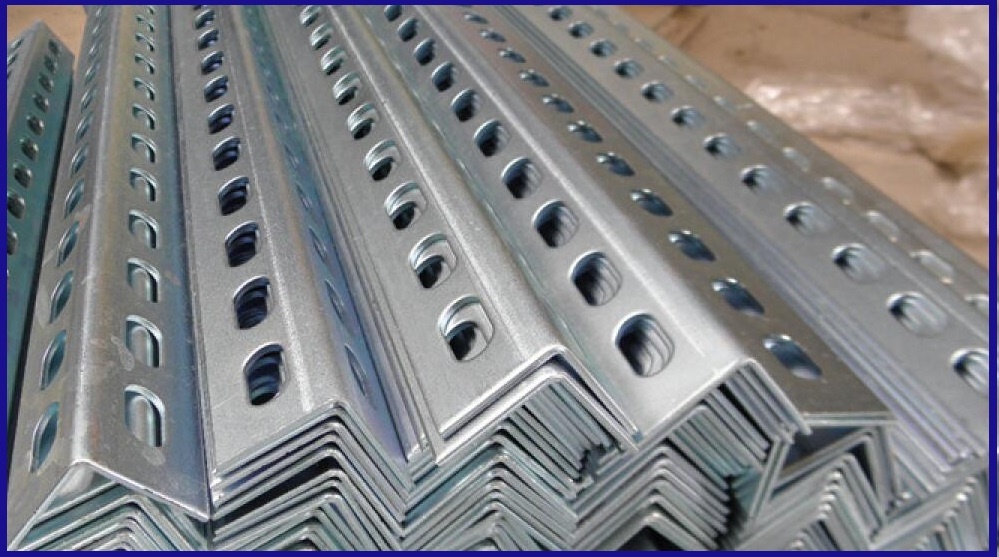
It is a commercial profile whose design is compared to the letter “L” since the way in which this steel profile is bent forms a 90º angle, which in turn can generate a material with equal or unequal sides. From these characteristics also arises the name of this commercial steel material.
Example: The steel angle profile is a material that can be used for the manufacture of real estate, furniture or accessories such as windows, doors, frames, bed stands, tables.
en: Ángulo de acero
Steel beam
Noun
They are structural elements that support construction loads and transmit them to the vertical supporting elements (columns or walls).
Example: Steel beams are bars that work in bending
Steel beams are commonly used to support floors and roofs in large structures such as commercial buildings and bridges.
en: Viga de acero
Steel column
Noun
They are construction elements that are made in the factory, although occasionally modifications of any kind can be made to them in the field.
Example: The steel columns are covered with concrete, due to architectural requirements, in order to avoid corrosion.
en: Columna de acero
Steel framing
Noun
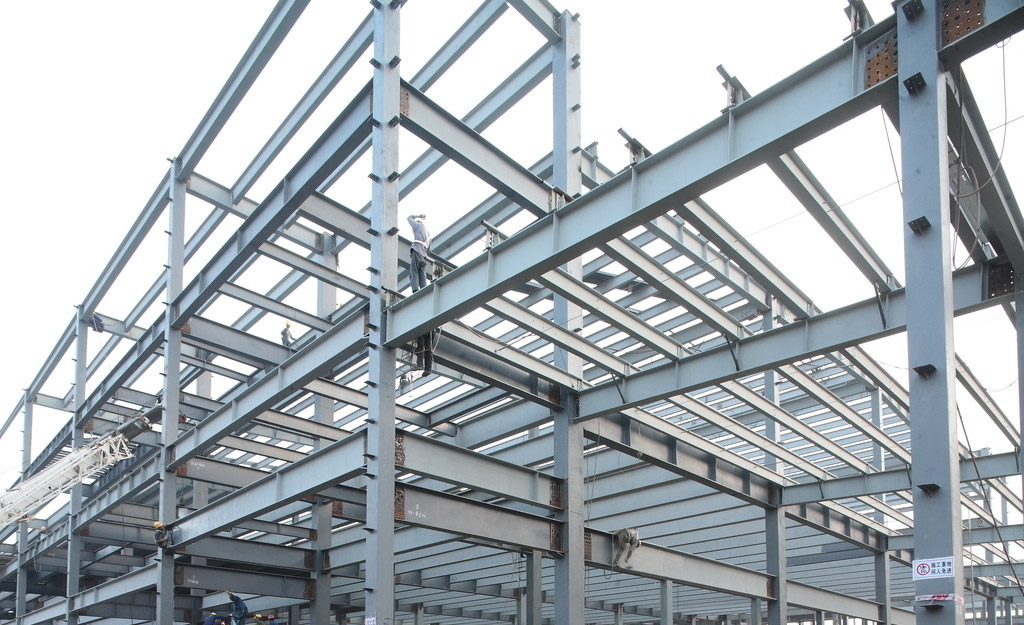
It is based on a frame or skeleton of any structure whose components are mostly steel columns and beams, these elements help us to support the floor, ceiling, and walls of a building.
Example: The building has a steel framing.
en: Estructura de acero
Steel joist
Noun
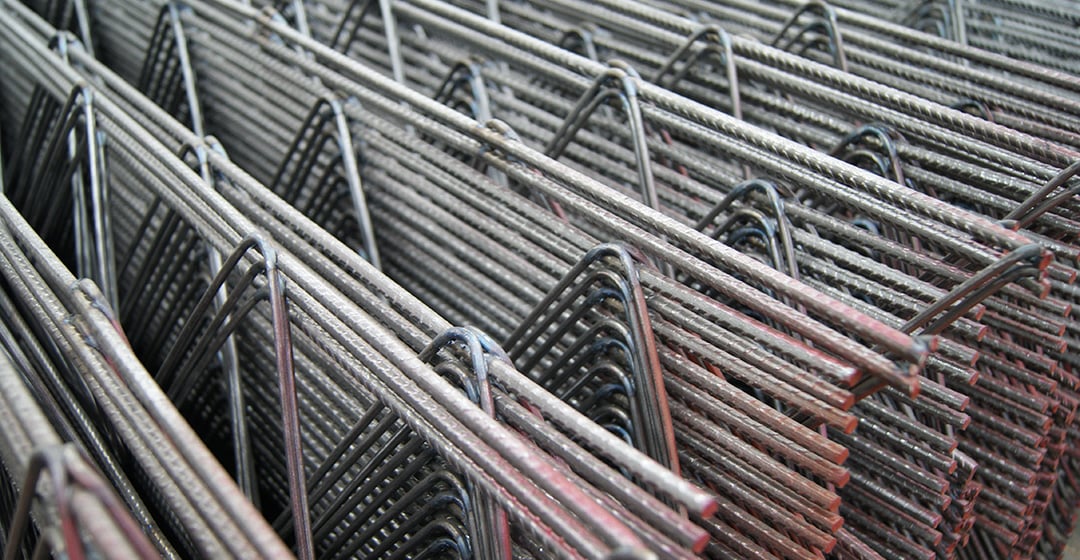
It consists of a structure composed of a series of steel rods, two lower and one upper, as well as a zig-zag wire rod that joins and contributes to the mooring of the concrete of the compression layer. In the lower part, a concrete pad is cast that serves to support the vaults and perform the function of formwork when casting, designed to support loads produced in floor or roof slabs. They can be armed or prestressed.
Example: The steel joists are responsible for being a foundation for the upper floors of an enclosure.
en: Vigueta de acero
Steel member
Noun
Steel members are capable of presenting large deformations and still resisting great forces. This implies that steel members can undergo large deformations during assembly.
Example: Steel members are used in both tall and lower-rise buildings. Among its advantages are its greater load capacity, an ideal ductility for seismic zones, more resistance to fire and better damping
en: Miembro de acero
Steel plate
Noun
It is a material often used to create metal products. Manufactured to different thicknesses and widths, the steel plate is cut and welded together to create a final product.
Example: In the work, steel plates were used to make chimneys and railings.
en: placa de acero
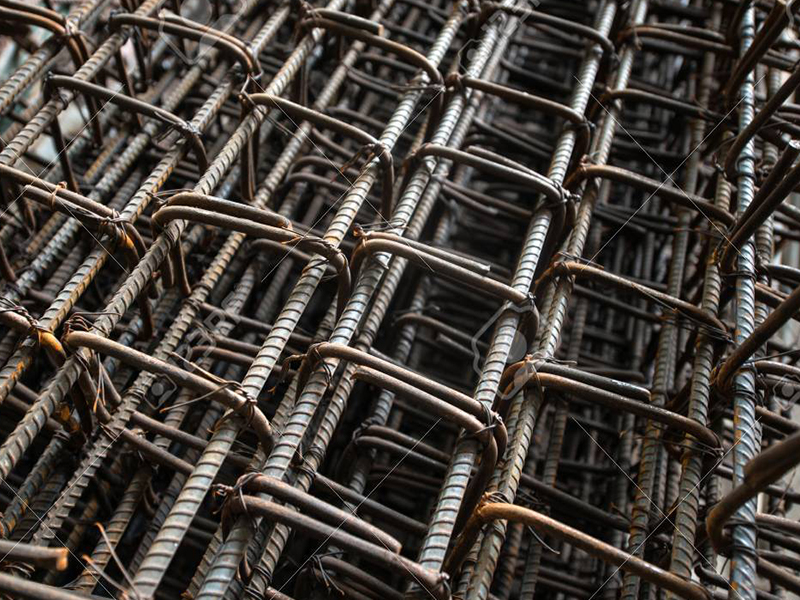
Steel reinforcement
Steel reinforcement is a steel bar or work of steel wires utilized as a tension device in reinforced concrete and reinforced masonry structures to fortify and help the solid under strain.
Example: The reinforcing steel of the slabs is mainly placed in a direction parallel to that of the slab surfaces.
en: Refuerzo de acero
Steel reinforcing
verb
Is the process of reinforcing steel in structures
Example: Masons know how to correctly reinforce steels.
en: acero de refuerzo
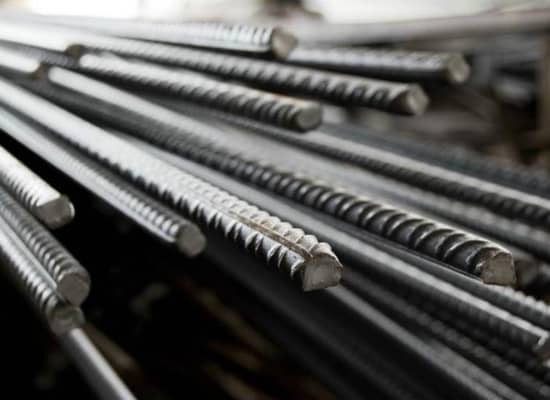
Steel rod
Noun
Are long, rectangular-shaped metal bars used in a wide range of structural and architectural applications.
Example: Yesterday I went to the hardware store and bought a steel body.
en: Varilla de acero
Steel sections
Noun
Steel sections are pieces of steel, it can form different shapes that can be used structurally due to its strength or demands of a steel structure.
Example: Reinforced beams are a classification of steel sections in a construction.
en: Secciones de acero
Support
Adjective
Structural bearings ensure the controlled transmission of forces between the superstructure and the substructure. They also facilitate rotations around each axis and movements in all directions.
Example: A structural support is an element that is located between two elements of the structure (beams, columns, abutments, etc.).
en: Apoyo
Tile
Noun
Tile or small slab used for wall and floor coverings, we will cover the pool walls with blue tiles.
Example: The tile is white
en: Loseta
Unreinforced concrete
Noun
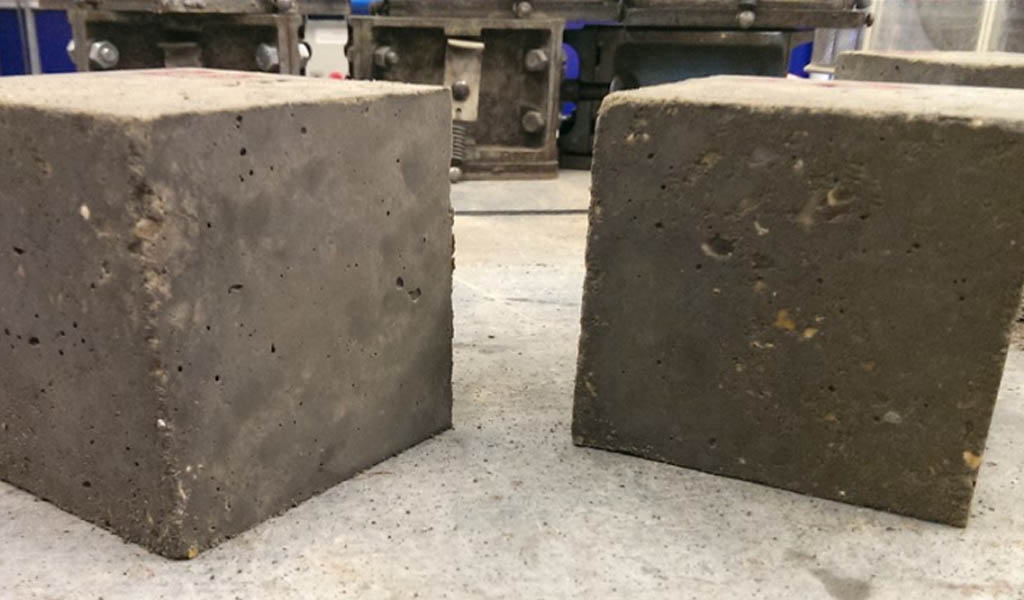
It is the concrete without reinforcement or reinforced only by shrinkage or temperature changes. Concrete without any other specific admixture or element, in contrast to concrete containing such admixture or element, e.g., concrete without aeration.
Example: Unreinforced concrete consists of a conventional hardened mixture of gravel, sand, cement and water.
en: Concreto no Reforzado
Urban Readability
adject
Qualities of a space or territory that allow anyone to: clearly identify the most relevant urban elements, understand the settlement as a whole and decipher its structure without difficulty.
Example: Urban legibility is the quality that allows for the study of cities.
en: Legibilidad Urbana
Wedge Anchor
Noun
Is a special type of fastener used to attach objects to concrete or masonry structures. They can be used to secure a piece of artwork to a brick wall, hang conduit or plumbing pipes from the ceiling, or bolt an item to the floor. Wedge anchors are also known as anchor bolts or expansion bolts in some areas.
Example: Wedge Anchors are characterized for being extra strong anchors for concrete fixings.
en: Ancla de Cuña
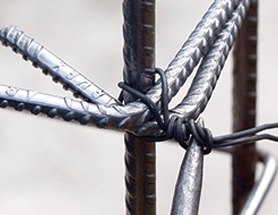
Wire Ties
Noun
They are useful in construction, as they are used to tie, fasten reinforcement, slab reinforcement, footings, enclosures, beams, columns, gratings and overlaps.
Example: Wire ties are used to fasten rebars, slab reinforcement, footings, frames, beams, columns, gratings and overlaps.