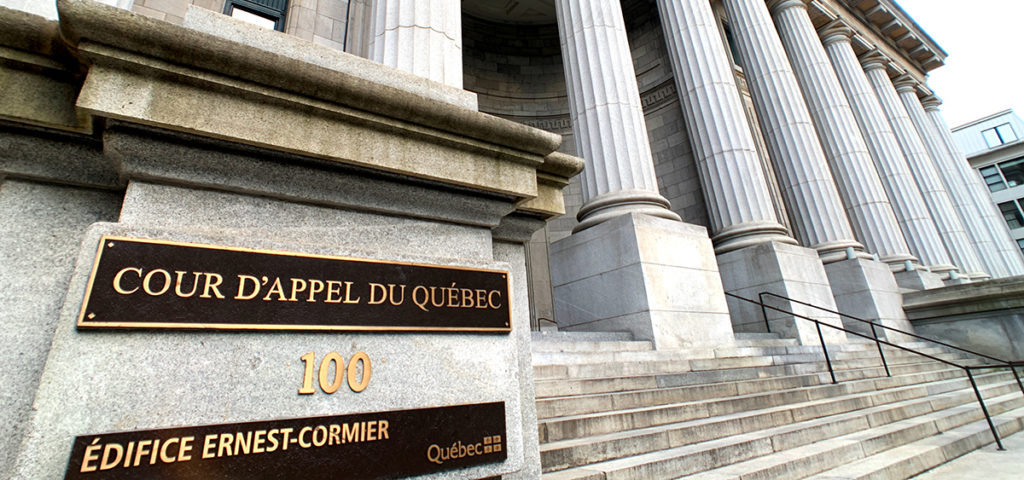
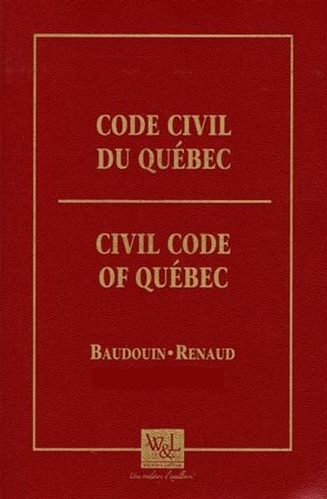
This glossary presents 20 different law terms that are used in the world of justice and it's different branches.
Antecedent
noun
A preceding event, condition, or cause
Example: Events that were antecedents of the war
fr: Antécédents
Appeal
noun
Apply to a higher court for a reversal of the decision of a lower court.
Example: Appeal court of Quebec
fr: Appel
Civil code
noun
A civil code is a codification of private law relating to property, family, and obligations.
Example: The Civil code of Quebec is the main law code used by the court.
fr: Code Civil
Contract
noun
A written or spoken agreement, especially one concerning employment, sales, or tenancy, that is intended to be enforceable by law.
Example: We're closing the contract for the car sell.
fr: Contrat
Criminality
noun
Behavior that is contrary to or forbidden by criminal law.
Example: Criminality is a branch of law.
fr: Criminalité
Doctrine
noun
A principle or position or the body of principles in a branch of knowledge.
Example: These family law lawyer are the writers of these doctrines.
fr: Doctrine
Grantor
noun
A person or institution that makes a grant or conveyance.
Example: He was the grantor of the house.
fr: Cessionnaire
Judge
noun
A public official appointed to decide cases in a court of law.
Example: The judge called the end of the appeal.
fr: Juge
Judgment
noun
A decision by a court or other tribunal that resolves a controversy and determines the rights and obligations of the parties.
Example: The judge signed the judgment.
fr: Jugement
Jurisprudence
noun
1) The science or philosophy of law.
2) A system or body of law.
3) The course of court decisions as distinguished from legislation and doctrine.
Example: They use past jurisprudences as guide to think of a decision.
fr: Jurisprudence
Lawyer
noun
A person who practices or studies law; an attorney or a counselor.
Example: The lawyer rest his case.
fr: Avocat
Legal act
noun
A writing which states in a legal form that a thing has been said, done, or agreed. In Latin, Instrumentum.
Example: Prosecuting someone is part of a legal act.
fr: Acte juridique
Legislation
noun
Legislation is a law or a set of laws that have been passed by Parliament. The word is also used to describe the act of making a new law.
Example: The council voted a new law and applied it in the legilsation code.
fr: Législation
Litigation
noun
The process of taking legal action.
Example: Lawyers often defend a litigious cause.
fr: Litige
Notary
noun
A person authorized to perform certain legal formalities, especially to draw up or certify contracts, deeds, and other documents for use in other jurisdictions.
Example: The notary often deal with contracts.
fr: Notaire
Office
noun
A position of authority or service, typically one of a public nature.
Example: The office of attorney general.
fr: Office
Research memo
noun
The general notion of research memos is that somewhere between the research per se and the writing of a dissertation or book about it, there's a need for short writings (500-1000 words) on specific topics. Memos are widely used in ethnographic and case study approaches.
Example: She did a research memo for this research.
fr: Mémo de recherche
Right
noun
A moral or legal entitlement to have or obtain something or to act in a certain way.
Example: He has a right to buy this property.
fr: Droit
Rubric
noun
A category of a certain subject such as in a research.
Example: He searched trough the different rubrics of civil responsability.
fr: Rubrique
Sentence
noun
The punishment assigned to a defendant found guilty by a court, or fixed by law for a particular offense.
Example: The sentence for this murderer was set to 10 years without parole.