Hello everyone,
my name is Juliette, and I am a student in Social Science since September 2020. My field of study is Psychology, and that is what this glossary is going to be about. This glossary will be helpful for people who study in Psychology, or even for those who have an interest about this field. It will also be very helpful academically because Psychology has a very vast and complicated vocabulary. Students will then have an interesting and complete glossary to rely on. Therefore, it will include many psychological terms with a precise definition of each term, their part of speech, their pronunciation and translation, a relevant image, and an example. This glossary will be composed of 20 psychological terms found in the Actively Engaged Online book by Nicholas Walker.
algolagnia
noun
Desire for sexual gratification through inflicting pain one oneself or others; sadomasochism
Example: This patient is suffering from algolagnia.
fr: algolagnie
autohypnosis
noun
The process or result of self-induced hypnosis.
Example: Autohypnosis is a practice used by some psychiatrists to try to access the subconscious mind of their patients.
fr: autohypnose
bipolar disorder
noun
A mental illness that brings severe high and low moods and changes in sleep, energy, thinking, and behavior.
Example: One Stanford University study compared patients with bipolar disorder with a group of healthy people.
fr: trouble bipolaire
cerebral dominance
noun
The normal tendency for one side of the brain to control particular functions, such as handedness and speech.
Example: Cerebral dominance or specialization has been studied in relation to a variety of human functions.
fr: dominance cérébrale
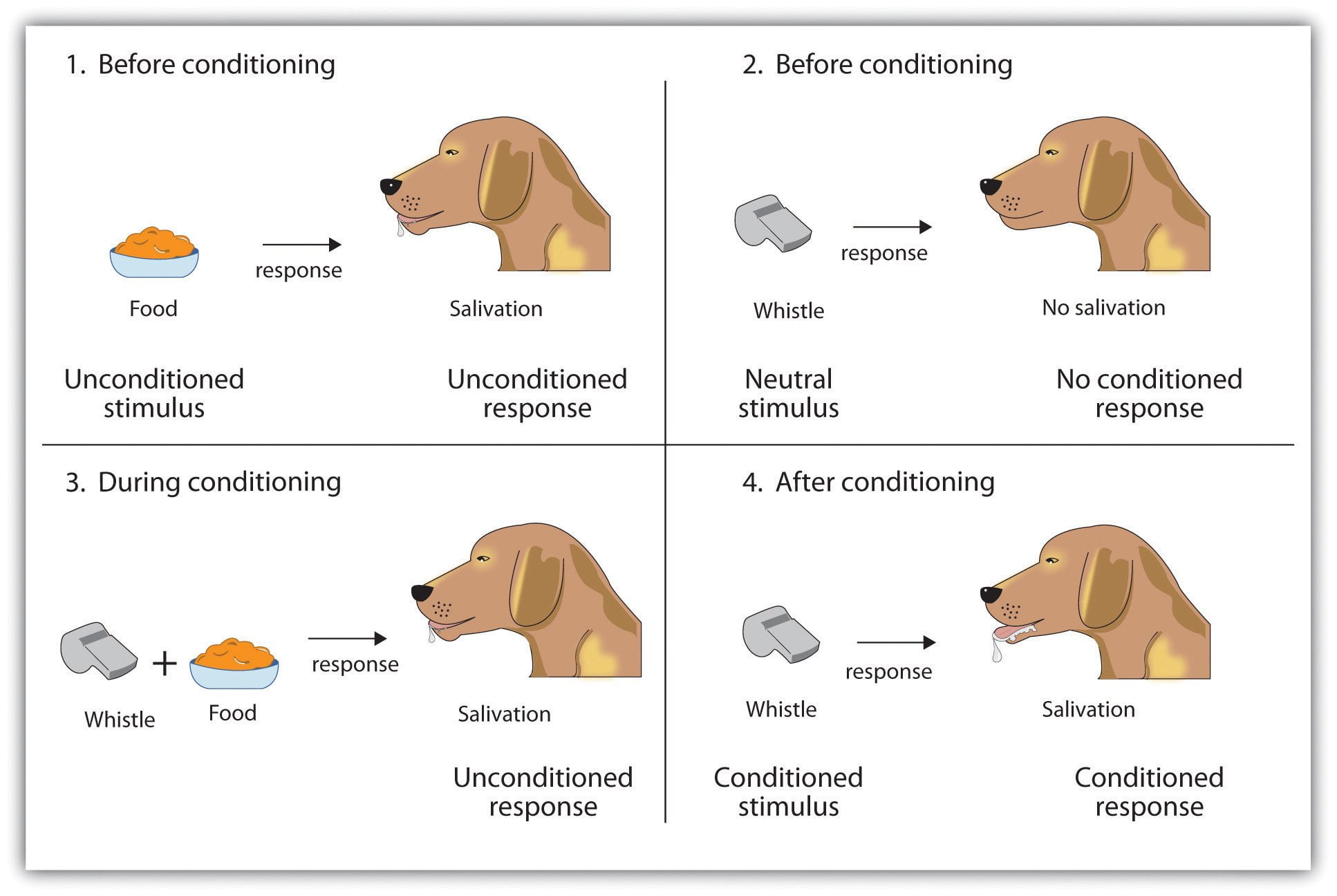
classical conditioning
noun
A learning process that occurs when two stimuli are repeatedly paired.
Example: The unconditioned stimulus in a classical conditioning experiment must occur before the reward for the stimulus-reward association to occur.
fr: conditionnement classique
cognitive dissonance
noun
The state of having inconsistent thoughts, beliefs, or attitudes, especially as relating to behavioral decisions and attitude change.
Example: Important concepts of cognitive motivation theory include expectancy-value theory, attribution theory, cognitive dissonance, self-perception, and self-actualization.
fr: dissonance cognitive
dependance
noun
The real need of the organism, or something that individuals can not provide for themselves.
Example: Some people have a drug dependance.
fr: dépendance
dissociative disorder
noun
A personality disorder marked by a disturbance in the integration of identity, memory or consciousness.
Example: Dissociative disorder is considered an emergency defence mechanism that shields against overwhelming anxiety.
fr: trouble dissociatif
empathy
noun
The ability to understand and share the feelings of another.
Example: I find consolation in the fact that psychological research shows that man is capable of empathy as well as evil.
fr: empathie
ethnocentrism
noun
Belief in the superiority of one's own ethnic group.
Example: The comments reveal an ethnocentrism in judging lower-class behavior using middle-class standards.
fr: ethnocentrisme
flooding
noun
A therapy for phobias in which clients are exposed, with their permission, to the stimuli most frightening to them.
Example: Flooding therapy exposes the patient to their phobia, in all its glory, for a 2-3 hour session. This is one of the most extreme versions of exposure therapy.
fr: exposition/immersion
halo effect
noun
The tendency for an impression created in one area to influence opinion in another area.
Example: For example, executives who assume that because an employee is a highly skilled communicator he or she also is a good decision-maker are adhering to the halo effect.
fr: effet de halo
hypermnesia
noun
Unusual power or enhancement of memory, typically under abnormal conditions such as trauma, hypnosis, or narcosis.
Example: The hypermnesia and amnesia existing for the client suffering PTSD symptoms are also considered to be similar to hypnotic phenomenon.
fr: hypermnésie
internalizing
verb
Make attitudes or behavior part of one's nature by learning or unconscious assimilation.
Example: These children suffer a wide range of problems that involve either internalizing or externalizing feelings.
fr: intériorisation
mental distress
noun
A range of symptoms and experiences of a person's internal life that are commonly held to be troubling, confusing or out of the ordinary.
Example: In some cases, war and natural disasters had left millions of people, mostly children and women, in a state of physical and mental distress.
fr: détresse psychologique
narcissism
noun
It is used to describe a person characterized by egotism, vanity, pride, or selfishness.
Example: He believes that such behavior results from personality traits such as narcissism as well as a memory bias.
fr: narcissisme
neurotic
adjective
Having, caused by, or relating to neurosis.
Example: This, it was believed, would pacify psychotic patients and relieve extreme neurotic symptoms.
fr: névrosé
obsessive-compulsive disorder
noun
An anxiety disorder characterized by intrusive thoughts that produce uneasiness, apprehension, fear, or worry; by repetitive behaviors aimed at reducing the associated anxiety.
Example: Experts say that an abnormal fixation on STDs can be a sign of obsessive-compulsive disorder or hypochondria.
fr: trouble obsessionnel compulsif
paranoia
noun
A mental condition characterized by delusions of persecution, unwarranted jealousy, or exaggerated self-importance, typically elaborated into an organized system.
Example: Her case is misdiagnosed, and she finds herself swept into vertiginous cycles of self-loathing and ecstasy, paranoia and visionary exaltation.
fr: paranoïa
resilience
noun
Is an individual's tendency to cope with stress and adversity.
Example: It takes a lot of resilience to fight a mental illness.