This glossary contains a list of words a paramedic should know.
anisocoria
Noun
Anisocoria is unequal pupil size. The pupil is the black part in the center of the eye.
Example: Bowie suffered from anisocoria which meant his left pupil was constantly dilated - making his eyes look different colours.
en: Anisocorie
aphasia
Noun
Loss of ability to understand or express speech, caused by brain damage.
Example: It should be noted that there is a lot of variation in APHASIA as no two individual's brain anatomy and physiology as well as language usage are identical.
en: Aphasie
asystole
Noun
Asystole is also known as flatline. It is a state of cardiac standstill with no cardiac output and no ventricular depolarization.
Example: Some patients have asystole from the onset of arrest and are unsuitable for defibrillation by the ambulance crew or bystanders.
en: Asystolie
cyanosis
Noun
A bluish discoloration of the skin resulting from poor circulation or inadequate oxygenation of the blood.
Example: There was still some evidence of peripheral CYANOSIS and a few fine crackles detected at the lung bases.
en: Cyanose
diaphoresis
Noun
The medical term used to describe excessive, abnormal sweating in relation to your environment and activity level.
Example: Fever, diaphoresis, and tachycardia were controlled on the second day.
en: Diaphorèse
dysrhythmia
Noun
Abnormality in a physiological rhythm, especially in the activity of the brain or heart.
Example: TIA's may also be caused by a fall in cerebral perfusion due to DYSRHYTHMIA or decreased flow through stenosed carotid arteries due to atheroma formation.
en: Dysrythmie
embolism
Noun
Obstruction of an artery, typically by a clot of blood or an air bubble.
Example: Anticoagulant drugs in the treatment of pulmonary EMBOLISM.
en: Embolie
homeostasis
Noun
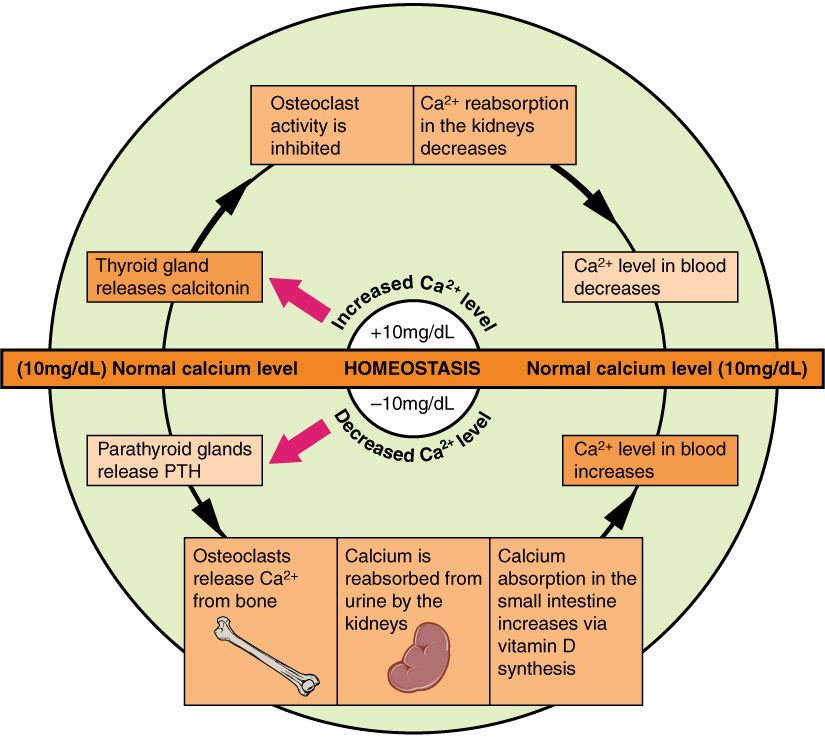
The tendency toward a relatively stable equilibrium between interdependent elements, especially as maintained by physiological processes.
Example: Medical intervention is normally required to enable the hypothermic patient to restore normal temperature and HOMEOSTASIS (Kelly, 2001).
en: Homéostasie
meningitis
Noun
Meningitis is an inflammation (swelling) of the protective membranes covering the brain and spinal cord.
Example: The complications include blood infection, MENINGITIS in mother and many detrimental effects to the baby (e.g. miscarriage, premature birth, blood infection, MENINGITIS and death).
en: Méningite
myocardium
Noun
The middle muscular layer of the heart wall.
Example: Reperfusion arrhythmias Studies have shown that after reperfusion of the MYOCARDIUM, ventricular arrhythmias, such as ideoventricular rhythm, non-sustained ventricular tachycardia and bradycardia have occurred.
en: Myocarde
opioids
Noun
A compound resembling opium in addictive properties or physiological effects.
Example: The role of OPIOIDS is considered in the discussion where a model of reward that distinguishes between pleasure and desire is explored.
en: Opioïdes
paresthesia
Noun
An abnormal sensation, typically tingling or pricking (“pins and needles”), caused chiefly by pressure on or damage to peripheral nerves.
Example: People experiencing paresthesia should avoid alcohol.
en: Paresthésie
pneumothorax
Noun
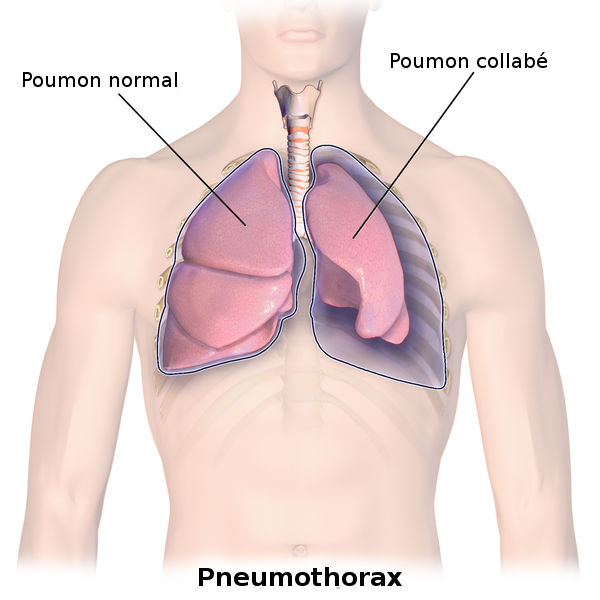
A pneumothorax is a collapsed lung. A pneumothorax occurs when air leaks into the space between your lung and chest wall. This air pushes on the outside of your lung and makes it collapse. A pneumothorax can be a complete lung collapse or a collapse of only a portion of the lung.
Example: A rare cause of a PNEUMOTHORAX is asthma, patients often present with sudden onset of pleuritic pain and progressively increasing breathlessness.
en: Pneumothorax
pulse oximeter
Name group
An oximeter that measures the proportion of oxygenated hemoglobin in the blood in pulsating vessels, especially the capillaries of the finger or ear.
Example: Investigations Oxygen Saturations PULSE OXIMETER - measures percentage of Hb saturated with oxygen, provides indication of how much oxygen is required.
en: Oxymètre
systole
Noun
Pressure by heart contraction.
Example: A high velocity jet from the feeding artery enters the aneurysm sac during systole .