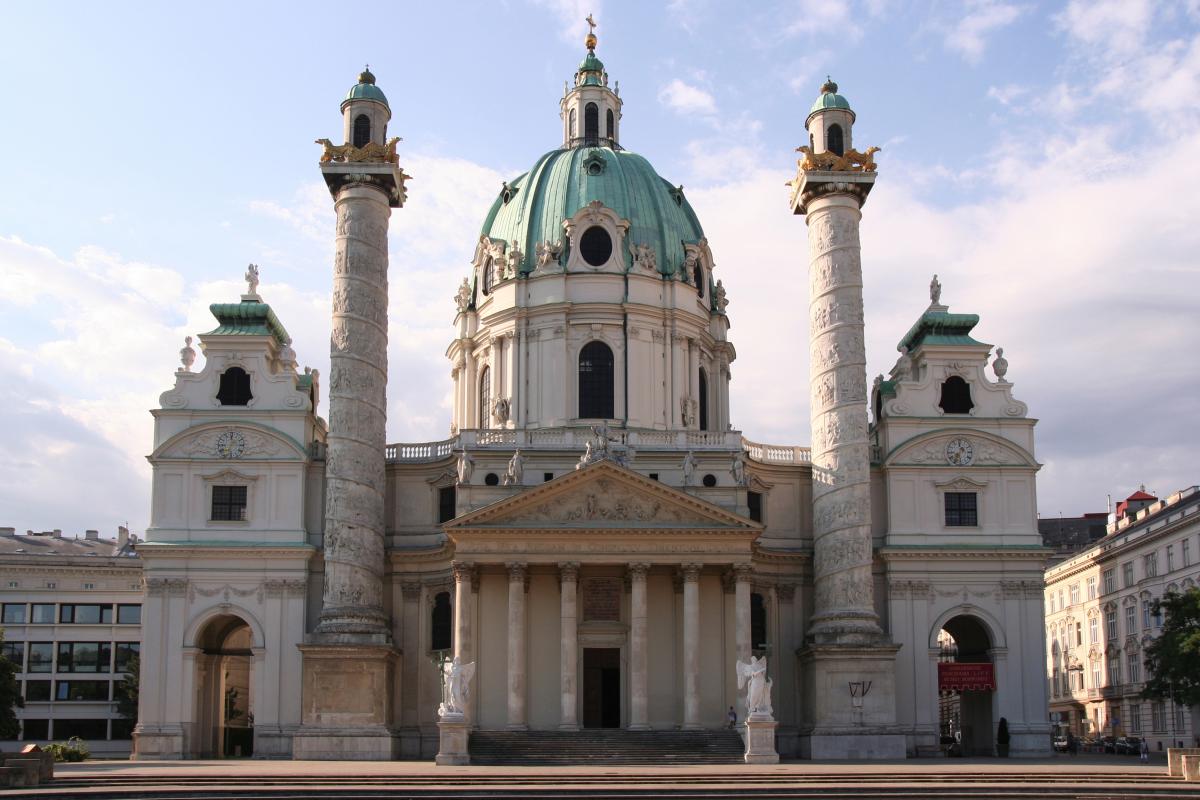
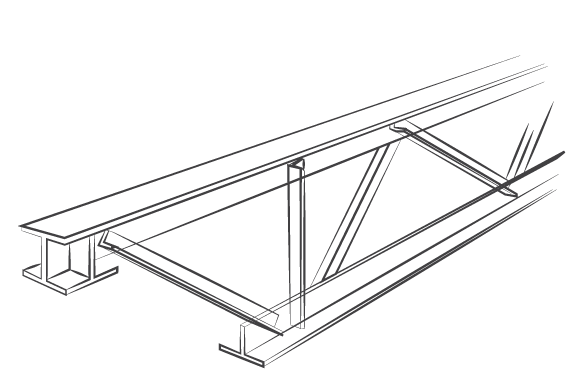
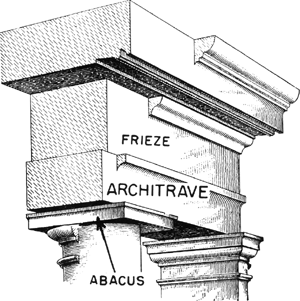
(in classical architecture) a main beam resting across the tops of columns, specifically the lower third entablature.
Example: At the ground floor level, the passenger buildings central facade is characterized by five portals with architraves topped by round arches.
es: Arquitrabe
Blobitecture
noun
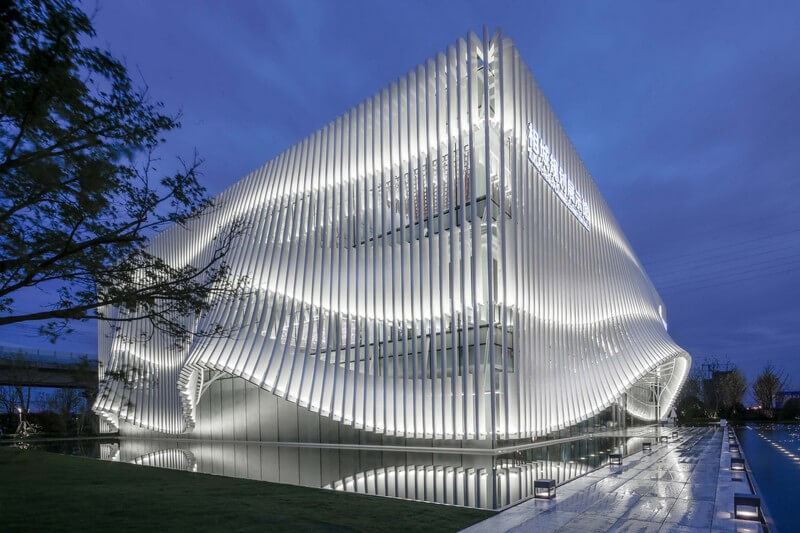
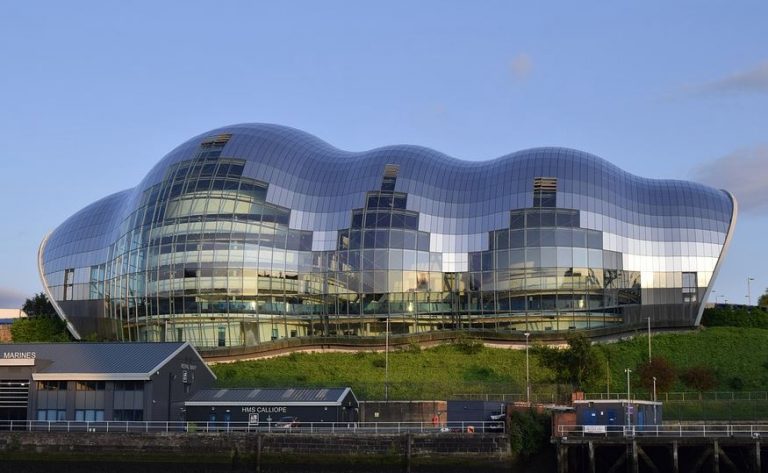
Blobitecture is terms for a movement in architecture in which buildings have an organic, amoeba-shaped, building form.
Example: Though the term blob architecture was in vogue already in the mid-1990s, the word blobitecture first appeared in print in 2002
es: Blobitectura
Bracket
noun
A projection from a vertical surface that provides structural and/or visual support for overhanging elements such as cornices, balconies, and eaves.
Example: Brackets are the most important part of a building's cantilever and cornice structure.
es: Soporte
Brick
noun
a small rectangular block typically made of fired or sun-dried clay, used in building.
Example: The outer walls of the house were made of brick
es: Ladrillo
Ceiling
noun
the upper interior surface of a room or other similar compartment.
Example: the books were stacked from floor to ceiling
es: Plafón
creeper
noun
a plant that grows along the ground, or up walls or trees
Example: The undergrowth was thick and dominated by tangles of climbers, giant herbs and thorny creepers.
es: enredadera
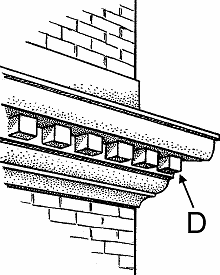
Dentil
noun
(in classical architecture) one of a number of small, rectangular blocks resembling teeth and used as a decoration under the soffit of a cornice
Example: A dentil course decorates the projecting cornice and pediments of the building
es: Dintel
Doric
adjective
relating to or denoting a classical order of architecture characterized by a sturdy fluted column and a thick square abacus resting on a rounded molding.
Example: On the inner side towards the Acropolis, this wall is faced with a portico of six Doric columns.
es: Dórico
Eclecticism
noun
A mixing of various architectural styles and ornamentation of the past and present, including ornamentation from Asia. Eclecticism in architecture was very popular in both Victorian England and in the United States during the second half of the 19th century.
Example: The range and eclecticism of Edinburgh's hotels matches that of its famed festival.
es: Eclecticismo
Facade
noun
An exterior wall, or face, of a building. The front facade of a building contains the building’s main entrance, the rear facade is the building’s rear exterior wall, and the side facades are a building’s side exterior walls.
Example: The facade is made of limestone.
es: Fachada
Flagstone
noun
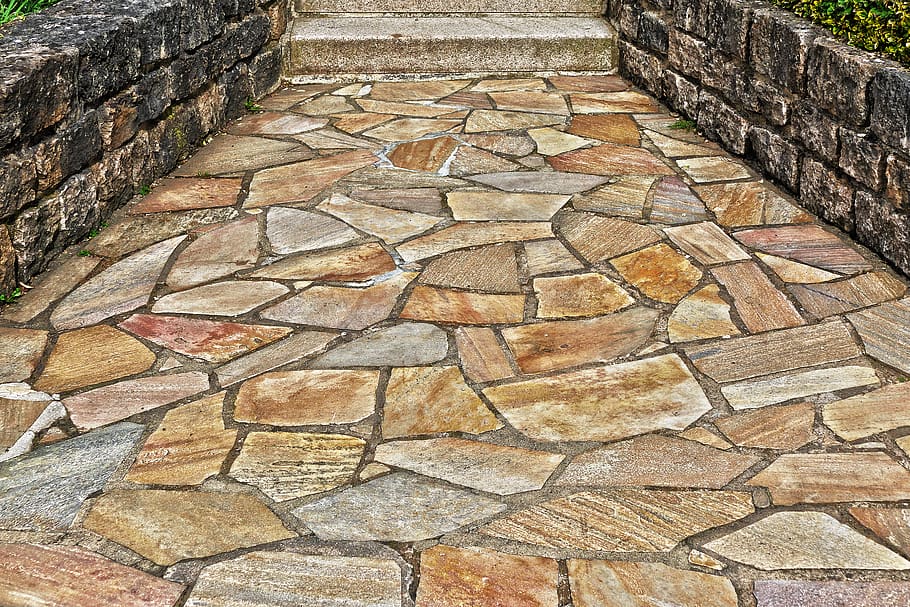
a flat stone slab, typically rectangular or square, used for paving.
Example: there was a carpet on the flagstones of the hall
es: Piedra laja.
flying buttress
noun
a buttress slanting from a separate pier, typically forming an arch with the wall it supports.
Example: t was among the first buildings in the world to use the flying buttress
es: Contrafuerte
foundation
noun
the structures below the surface of the ground that support a building
Example: The foundations will have to be reinforced to prevent the house from sinking further into the ground.
es: Cimentación
framework
noun
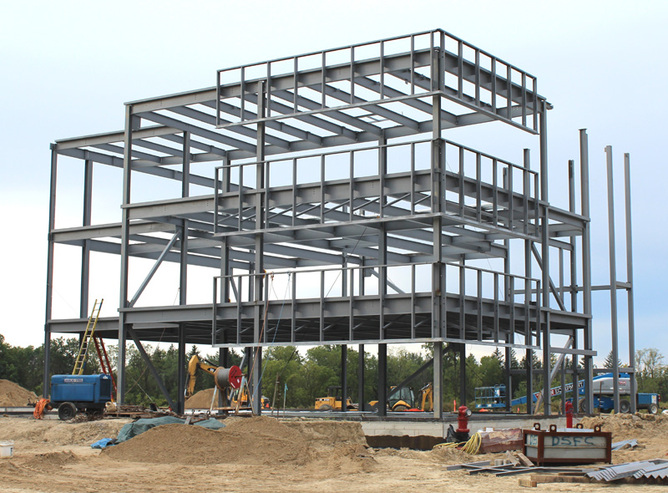
a structure around or over which something is built
Example: the steel framework of a bridge
es: armazón
Frieze
noun
a broad horizontal band of sculpted or painted decoration, especially on a wall near the ceiling.
Example: the horsemen of the Parthenon frieze
es: Friso
Girder
noun
a large iron or steel beam or compound structure used for building bridges and the framework of large buildings.
Example: the tower is made of steel girders criss-crossed to make it stronger.
es: Viga
Joist
noun
a length of timber or steel supporting part of the structure of a building, typically arranged in parallel series to support a floor or ceiling.
Example: In the case of a timber joist floor the floor joist floor the floor joists should be tied to the walls by means of steel ties.
es: Vigueta
Lattice
noun
a structure consisting of strips of wood or metal crossed and fastened together with square or diamond-shaped spaces left between, used as a screen or fence or as a support for climbing plants.
Example: The arch is formed by two lattice ribs hinged at the abutments.
es: Celosía
Masonry
noun
is the building of structures from individual units, which are often laid in and bound together by mortar
Example: cracks in the finished masonry
es: Mampostería
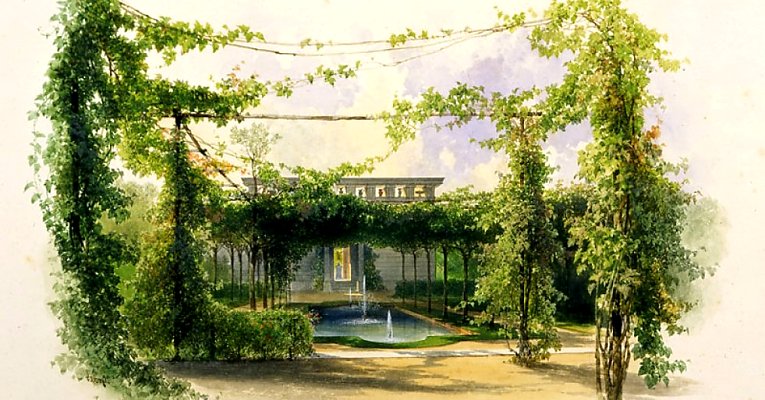
Pergola
noun
a structure in a garden that climbing plants can grow over and that people can walk through
Example: The old shed, boundary wall and pergola create a sheltered corner exposed to the afternoon sun where herbs can thrive.
es: Pérgolas
Railing
noun
a fence or barrier made of rails
Example: wrought-iron railings
es: Barandilla
Ribbed vaults
noun
a skeleton of arches or ribs on which masonry can be laid to form a ceiling or roof.
Example: Rib vaults were frequently used in medieval buildings, most famously in Gothic cathedrals.
es: bóvedas de crucería
Shuttering
noun
wood in planks or strips used as a temporary structure for fencing to contain setting concrete, to support the sides of trenches, etc.
Example: That's shuttering in its most basic, inexpensive form.
es: Cimbra
Sidewalk
noun
a path with a hard surface on one or both sides of a road, that people walk on
Example: Keep on the sidewalk, Rosie, there's a good girl.
es: Acera
Truss
noun
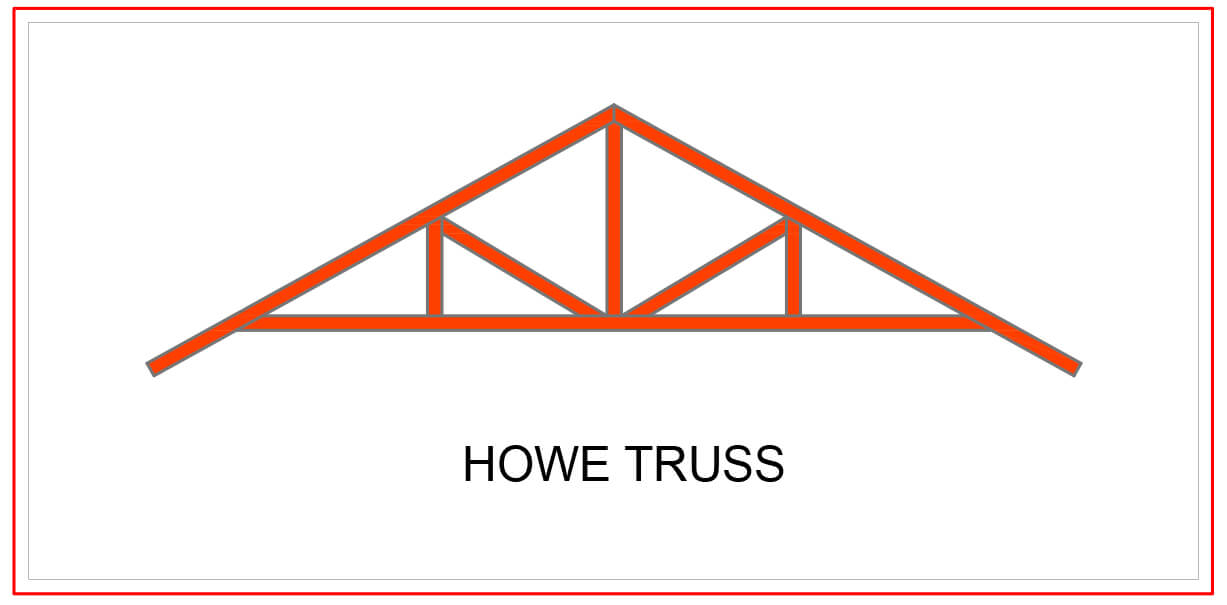
a framework, typically consisting of rafters, posts, and struts, supporting a roof, bridge, or other structure.
Example: The truss system requires a very long lead time


:max_bytes(150000):strip_icc():format(webp)/WWI-DC-memorial-doric-4640-crop-5920ce715f9b58f4c048d559.jpg)