Hi, my name is Megann Fortier. I am 19 years old. I have been studying Social Science for 2 years at Montmorency College. I am from Montreal, Canada. My field of study is psychology. This glossary is about the essentials of psychology. It can help anyone who doesn't know all the essentials terms. Every term that I use in this glossary is basic notions of psychology. Psychology needs some knowledge of introductory vocabulary before going into details, which is what I wrote in my glossary.
Sources: my definitions came from Google and my examples came from lextutor.ca.
attitude
noun
A settled way of thinking or feeling about someone or something, typically one that is reflected in a person's behavior.
Example: Furthermore, the Way Of Seeming, coupled with Zeno's comments in the Parmenides and Melissus' attitude to life seem to suggest that both of the Ways are epistemological rather than ontological (Waterfield suggests that the first section would be better titled the Way To Truth, as an epistemological method rather than a physical or metaphysical description and refer to two different views of the same world.
fr: attitude
brain
noun
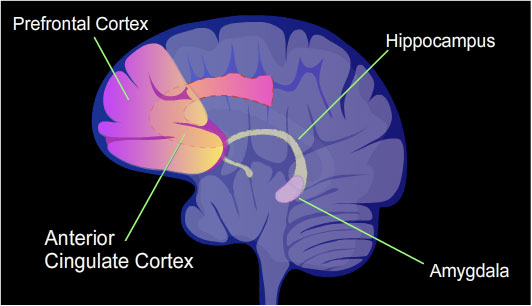
An organ of soft nervous tissue contained in the skull of vertebrates, functioning as the coordinating center of sensation and intellectual and nervous activity.
Example: The theory starts with one simple mechanism - the competition between memes to get into human brains and be passed on again - and from this it gives rise to explanation for such diverse phenomena as the evolution of the enormous human brain, the origins of language, human altruism, sex, religion, and even the evolution of the internet (Blackmore, 1999).
fr: cerveau
cerebral cortex
noun
The outer layer of the cerebrum (the cerebral cortex ), composed of folded gray matter and playing an important role in consciousness.
Example: It has also been suggested that REM sleep aids learning by weakening irrelevant synapses, which would decrease the efficiency of the cerebral cortex if they were not weakened (Crick and Mitchison, 1983, as cited in Rosenzweig et al, 1999).
fr: cortex cérébral
cognition
noun
The mental action or process of acquiring knowledge and understanding through thought, experience, and the senses.
Example: The cultural origins of human cognition.
fr: cognition
concept
noun
A plan or intention; a conception.
Example: Much evidence is in existence of this concept, the majority of which focuses on the similarities between the genetic materials, methods of replication, morphology and history between prokaryotic ancestors, and eukaryotic organelles.
fr: concept
diagnostic
noun
A distinctive symptom or characteristic.
Example: This can be seen in the use of the diagnostic and Statistical Manual of Mental Disorders IV (DSM-IV) by many mental health practitioners today.
fr: diagnostic
emotion
noun
A natural instinctive state of mind deriving from one's circumstances, mood, or relationships with others.
Example: Furthermore, it is difficult to say that they felt 'more anxiety' is pure anxiety because they might have mixed emotion such as excitement, which may be confounded to anxiety.
fr: émotion
fixation
noun
An obsessive interest in or feeling about someone or something.
Example: Ultrasound may also be used to decrease swelling in this inflammatory phase, but must be used for short periods to prevent hyperemia.10 Transcutaneous nerve stimulation (TNS) and electric muscle stimulation (EMS) have The use of manipulation can also be employed in the reaction phase and is suggested in the areas of fixation that have resulted from the injury.
fr: fixation
genes
noun
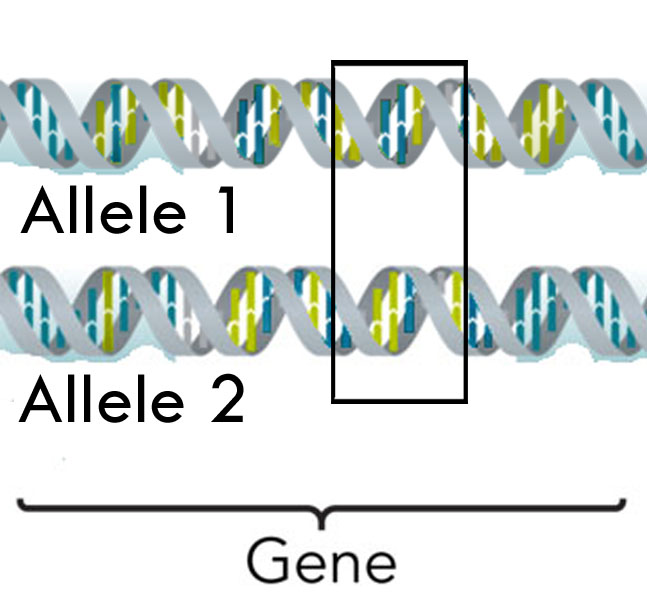
A unit of heredity which is transferred from a parent to offspring and is held to determine some characteristic of the offspring.
Example: Within the disciple of psychology Ainsworth's research and the Scaramella et al. paper contribute to the ongoing debate of nature or nurture, whether people act the way they do because of their genes or their environment.
fr: gènes
health
noun
A person's mental or physical condition.
Example: However it is now more common to use a biomedical approach to mental health problems when treating someone such as the Wolf-Man, rather than a psychoanalytic model.
fr: santé
hormone
noun
A regulatory substance produced in an organism and transported in tissue fluids such as blood or sap to stimulate specific cells or tissues into action.
Example: As for long-term regulation, studies on obese rats imply that there is a hormone that may be involved in the negative feedback loop.
fr: hormone
memory
noun
The faculty by which the mind stores and remembers information.
Example: Memes according to Blackmore are things which can be imitated only, and she identifies things which are not memetic in their development, for example perceptual experience, memory, learning, exploration, food preferences, communication and social relations.
fr: mémoire
mental
adjective
Relating to the mind.
Example: However it is now more common to use a biomedical approach to mental health problems when treating someone such as the Wolf-Man, rather than a psychoanalytic model.
fr: mental
motivation
noun
The reason or reasons one has for acting or behaving in a particular way.
Example: In acknowledging the existence of these cultural replicators we have to radically transform our ideas regarding human nature, behaviour and motivation and reformulate our understanding of how and why culture evolved, just as Darwin caused us to rethink our beliefs about the origin of our species.
fr: motivation
nerves
noun
A whitish fiber or bundle of fibers that transmits impulses of sensation to the brain or spinal cord, and impulses from these to the muscles and organs.
Example: This is achieved by the apoptotic death of cells covering much of the lamellar surface during normal conditions, resulting in its protrusion (Nilsson and Lutz, 2004; Nilsson and Renshaw, 2004) Other minor adjustments but worth mentioning appear to be the temporal blindness and deafness of the carp as a result of the activities auditory nerves and of those involved in vision being strongly suppressed (the reason for this will be discussed in part C).
fr: nerfs
obsession
noun
An idea or thought that continually preoccupies or intrudes on a person's mind.
Example: However many have criticised its obsession with consumption.
fr: obsession
perception
noun
A way of regarding, understanding, or interpreting something; a mental impression.
Example: Beyond this, the analogy of "making sense" extends further in the sense of serving the purpose of creating structural coherence and predictability in our perception of the world that we experience.
fr: perception
personality
noun
The combination of characteristics or qualities that form an individual's distinctive character.
Example: She explicitly stated that Nisa's story is not a fair representation of !Kung life, either in her experience or in her personality, and adds that her views were not shared by others (Shostak, 1990:350).
fr: personnalité
psychology
noun
The scientific study of the human mind and its functions, especially those affecting behavior in a given context.
Example: Historians that argue sacrificial behaviour was based on terror may find it hard to fathom the psychology of a victim who chooses to die for his god.
fr: psychologie
psychotherapy
noun
The treatment of mental disorder by psychological rather than medical means.
Example: Freud, Jung, Alder and Erikson developed psychoanalytic theories focused on case studies of patients in the clinical context of psychotherapy.
fr: psychothérapie
reaction
noun
An action performed or a feeling experienced in response to a situation or event.
Example: I feel that the driving-simulation task does not accurately represent the act of driving; following a marker moving across the screen bears little resemblance to a driver following the road, and the reaction task the participant has to carryout (pressing the button when the tracking stimulus changes to red) does not accurately represent the task of breaking in the case of traffic lights.
fr: réaction
reflex
noun
An action that is performed as a response to a stimulus and without conscious thought.
Example: The nerves also contain threads which can be mechanistically pulled by a motion to produce a reflex.
fr: réflexe
sensation
noun
A physical feeling or perception resulting from something that happens to or comes into contact with the body.
Example: The parietal lobes contain the primary sensory cortex which controls sensation such as touch, pressure and pain.
fr: sensation
stress
noun
A state of mental or emotional strain or tension resulting from adverse or very demanding circumstances.
Example: The last group, insecure-disorganised only include 2% of children with babies not being able to handle the stress of separation and exhibiting disorganised behaviour (as cited in E.E Smith et al.).
fr: stress
theory
noun
A supposition or a system of ideas intended to explain something, especially one based on general principles independent of the thing to be explained.
Example: As the philosophes of the enlightenment had posed a theory of a developing and progressing world, Marx and Engels concerned themselves with applying this model of development to society.
fr: théorie
values
noun
A person's principles or standards of behavior; one's judgment of what is important in life.
Example: Sensing unit In order to obtain the values of torque produced on the shaft, torque sensors, often known as torque cells, could be used.