This glossary aims to regroup useful term linked to IT field and programming.
Applet
Noun
In computing, an applet is any small application that performs one specific task that runs within the scope of a dedicated widget engine or a larger program, often as a plug-in.
Example: This Applet is really useful
en: Applet
Back-end
The part of a computer system or application that is not directly accessed by the user, typically responsible for storing and manipulating data.
Example: The back end has three parts to it: server, application, and database.
en: Back-end
Backbone
Noun
A backbone is the part of the computer network infrastructure that interconnects different networks and provides a path for exchange of data between these different networks. A backbone may interconnect different local area networks in offices, campuses or buildings.
When several local area networks (LAN) are being interconnected over a considerable area, the result is a wide area network (WAN), or metropolitan area network (MAN) if it happens to serve the whole city.
Example: Internet is a Backbone
en: Dorsale
Checksum
Noun
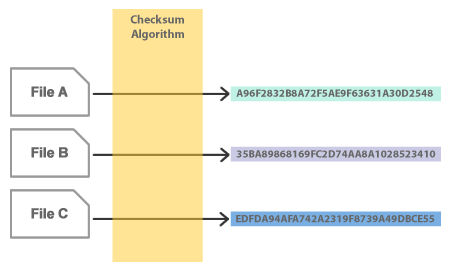
A digit representing the sum of the correct digits in a piece of stored or transmitted digital data, against which later comparisons can be made to detect errors in the data.
Example: Thanks to that checksum, I know for sure that this was not altered in any way before I received it.
en: Somme de contrôle
Cloud Bursting
Verb
Cloud bursting is an application deployment technique in which an application runs in a private cloud or data center and bursts into a public cloud when the demand for computing capacity spikes. This deployment model gives an organization access to more computing resources when needed.
Example: With Cloud Bursting, we can easily adjust our need in Cloud Service
en: Cloud Bursting
Clustering
Verb
Clustering is the task of dividing the population or data points into a number of groups such that data points in the same groups are more similar to other data points in the same group as those in other groups. In simple words, the aim is to segregate groups with similar traits and assign them into clusters.
Example: There are two models used for CLUSTERING; the shared nothing model and the shared-disk model.
en: Regroupement
Daemon
Noun
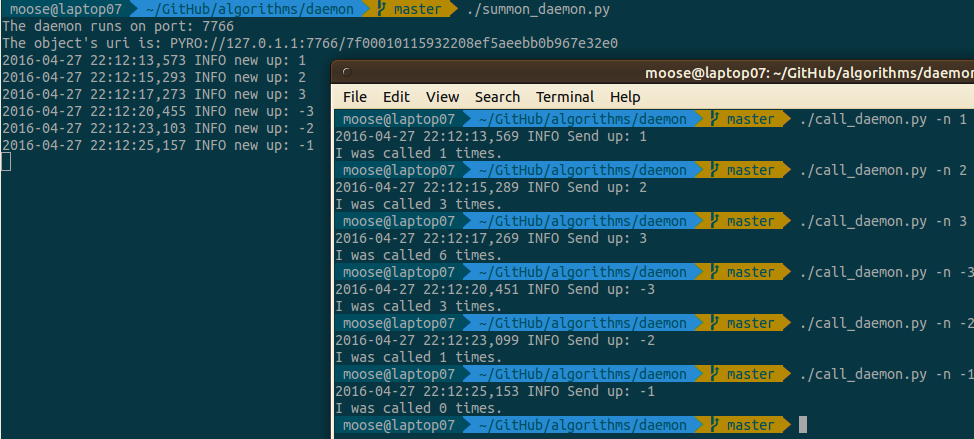
A daemon is a computer program that runs as a background process.
Example: This daemon logging CPU temperature for us
en: Daemon
Edge Computing
Noun
Edge computing is a form of computing that is done on site or near a particular data source, minimizing the need for data to be processed in a remote data center.
Example: This Edge Computing service allowed us to reduce latency between our data centers and our clients
en: Informatique de périphérie
Encapsulation
In object-oriented programming (OOP), encapsulation refers to the bundling of data with the methods that operate on that data, or the restricting of direct access to some of an object's components. Encapsulation is used to hide the values or state of a structured data object inside a class, preventing direct access to them by clients in a way that could expose hidden implementation details or violate state invariance maintained by the methods.
Example: Once the ENCAPSULATION is complete the IP datagrams are passed down to data link layer.
en: Encapsulation
Encryption
The process of converting information or data into a code, especially to prevent unauthorized access.
Example: I use encryption to protect sensitive information transmitted online
en: Chiffrement
Extranet
Noun
An extranet is a controlled private network that allows access to partners, vendors and suppliers or an authorized set of customers – normally to a subset of the information accessible from an organization's intranet.
Example: You can access our product list with our extranet
en: Extranet
Front-end
Noun
Relating to or denoting the part of a computer system or application with which the user interacts directly.
Example: Fancy front-end technology slows down the user experience.
en: Front-end
Gamification
Noun
The application of typical elements of game playing to other areas of activity, typically as an online marketing technique to encourage engagement with a product or service.
Example: Gamification is exciting because it promises to make the hard stuff in life fun
en: Gamification
Geo-fencing
Verb
Create a virtual geographic boundary around (an area) by means of GPS or RFID technology, enabling software to trigger a response when a mobile device enters or leaves the area.
Example: The company has now geo-fenced the locations of 180,000 US schools
en: Clôture géographique
Granularity
The ability to increase a system's capacity and performance through incremental processor expansion.
Example: This software will last longer if it has a good granularity
en: Granularité
Haptics
The use of technology that stimulates the senses of touch and motion, especially to reproduce in remote operation or computer simulation the sensations that would be felt by a user interacting directly with physical objects.
Example: Their research is centered on human-computer interaction, specifically focusing on wearable computing, haptics, and video games.
en: Haptique
Intranet
Noun
Intranets are private networks used by organizations to distribute communications exclusively to their workforce, and they’ve been used for decades by enterprises for internal communications.
Example: Our Intranet is only accessible to the employees of this company
en: Intranet
Wafer
Noun
In electronics, a wafer (also called a slice or substrate) is a thin slice of semiconductor, such as a crystalline silicon, used for the fabrication of integrated circuits and, in photovoltaic, to manufacture solar cells. The wafer serves as the substrate for microelectronic devices built in and upon the wafer.
Example: Before cutting the WAFER, a positive photoresist is deposited to improve photoresist adherence to the WAFER.
en: Wafer
Web Crawler
Noun
Web crawlers go by many names, including spiders, robots, and bots, and these descriptive names sum up what they do — they crawl across the World Wide Web to index pages for search engines.
Search engines don’t magically know what websites exist on the Internet. The programs have to crawl and index them before they can deliver the right pages for keywords and phrases, or the words people use to find a useful page.
en: Robot d'indexation
ZeroTrust Network Access
Noun
Zero trust network access (ZTNA) is a product or service that creates an identity- and context-based, logical access boundary around an application or set of applications. The applications are hidden from discovery, and access is restricted via a trust broker to a set of named entities.
Example: We upgrade our network with a Zero Trust policy