Alexis González
Alexis González
10 Módulo de transferencia de calor & inglés. terms
Learning a word is not a simple process, as it might seem at first glance, but is multi-faceted, just as as it will be verified in this work.
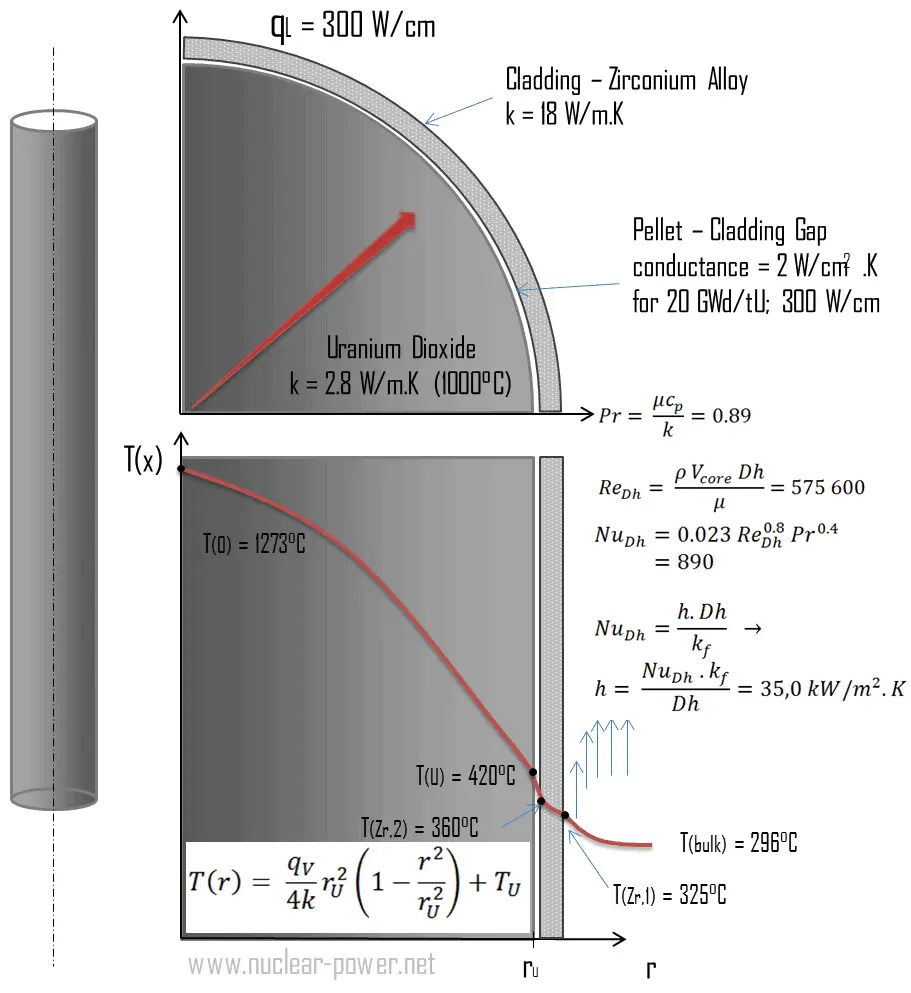
- Convection heat transfer coefficient
- noun
- The convection heat transfer coefficient, h, can be defined as: The rate of heat transfer between a solid surface and a fluid per unit area per unit temperature difference.
- Example: The convective heat transfer coefficient, h, can be defined as:
The rate of heat transfer between a solid surface and a fluid per unit area per unit temperature difference.
- en: Coeficiente de transferencia de calor por convección.
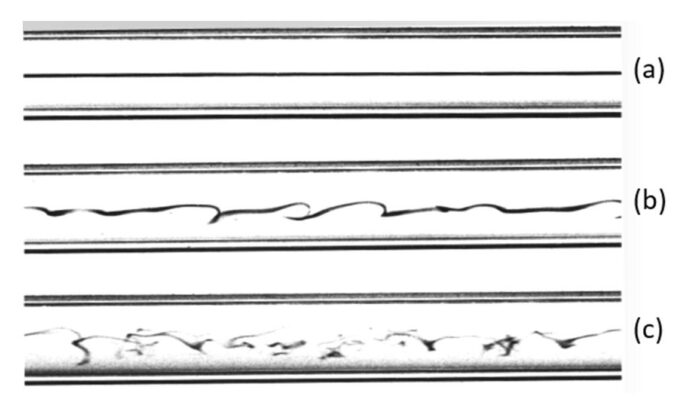
- Critical Reynold’s number
- noun
- Critical Reynolds number is associated with the laminar-turbulent transition, in which a laminar flow becomes turbulent.
- Example: The importance of the Reynolds Number is that it tells us, depending on the magnitude of the number, that the higher the viscosity of a fluid, the greater the diameter of the pipe can be without the flow ceasing to be laminar.
- en: Número crítico de Reynolds

- Friction Coefficient
- noun
- The coefficient of friction or coefficient of friction links the opposition to sliding offered by the surfaces of two bodies in contact according to the intensity of the mutual support they experience.
- Example: This coefficient is in fact an evaluation of the difficulty with which the surface of one material will slide over another material.
- en: Coeficiente de fricción

- Kinematic viscosity
- noun
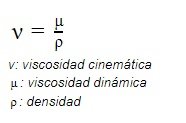
- Kinematic viscosity is a measure of the internal resistance of a fluid to flow under gravitational forces. It is determined by measuring the time in seconds required for a fixed volume of fluid to flow by gravity a known distance through a capillary into a calibrated viscometer at a closely controlled temperature.
- Example: Viscosity can be measured and reported as dynamic (absolute) viscosity or as kinematic viscosity. The two are easily confused, but they are significantly different.
- en: Viscosidad cinemática
- Laminar flow
- noun
- It is called laminar flows, the movement of a fluid when it is ordered, stratified and smooth. In laminar flow the fluid moves in parallel sheets without intermingling and each fluid particle follows a path called the streamline.
- Example: In laminar flow the fluid moves in parallel sheets without intermingling and each fluid particle follows a path called the streamline.
- en: Flujo laminar

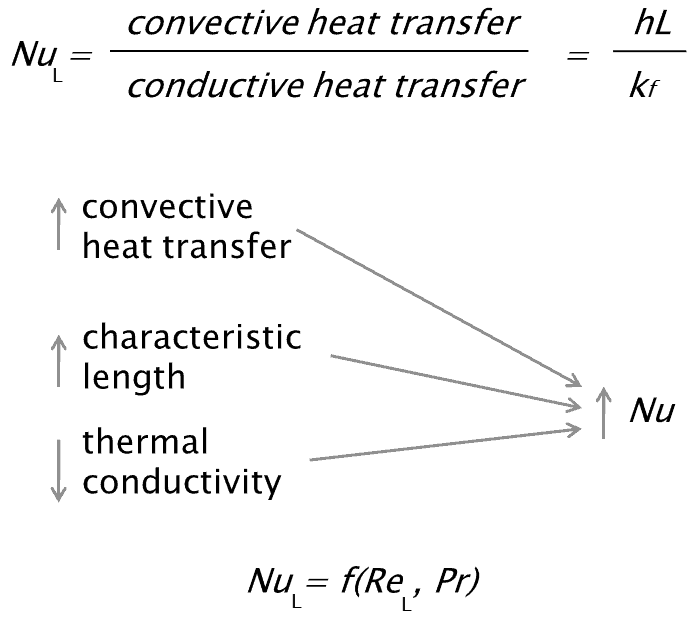
- Nusselt number
- noun
- is a dimensionless number that measures the increase in heat transfer from a surface through which a fluid flows (heat transfer by convection) compared to heat transfer if it occurred only by conduction.
- Example: The number of Nusseltes for the thermal boundary layer which is the coefficient of friction for the velocity boundary layer.
- en: Número de Nusselt
- Prandtl number
- noun
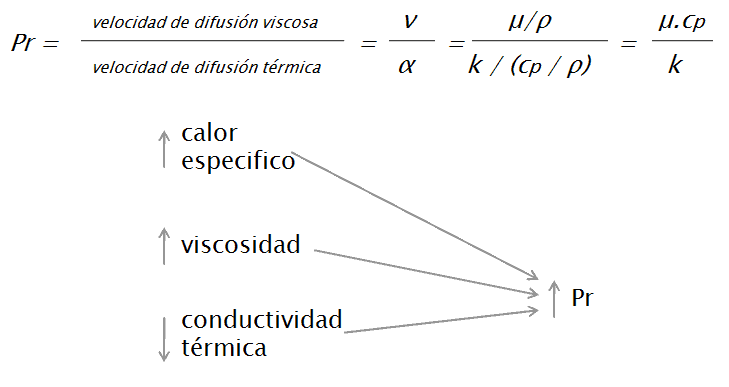
- is a dimensionless quantity that relates the diffusivity of the momentum, through the kinematic viscosity ν (Greek letter that is read “nu”) of a fluid, with its thermal diffusivity α in the form of a quotient.
- Example: The Prandtl number is one of the important numbers for modeling the flow of fluids and in particular the way heat is transferred in them by convection.
- en: Número de prandtl
- Reynold number
- noun
- The Reynolds number is one of the most important dimensionless numbers in fluid mechanics and, in turn, one of the most basic. In fact, it is one of the first concepts to be learned in any fluid mechanics course.
- Example: According to the value of Re that we obtain when solving mathematical problems, we can tell if a flow is laminar or turbulent.
- en: Número de Reynold

- Shear stress
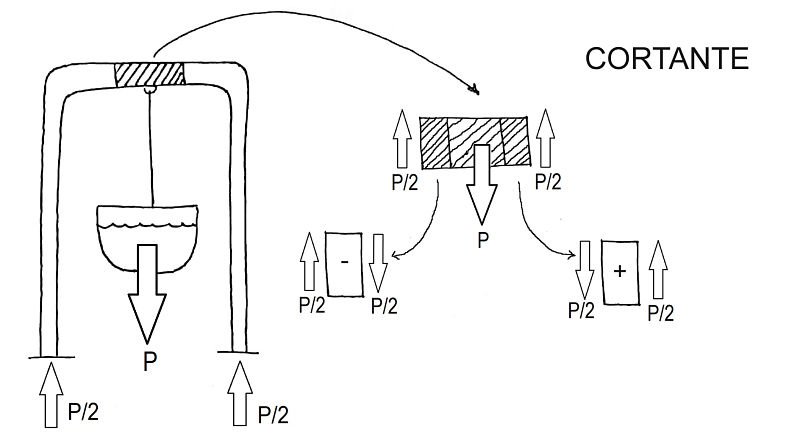
- In the case of shear stress in structures, the sign of the force is totally indifferent, without the mechanical effect on the bar changing at all, as long as its section is symmetrical.
- Example: If the section is asymmetric, the sign of the shear does alter the mechanical behavior of the bar.
- en: Esfuerzo cortante
- Turbulent flow
- noun
- It is one in which there are fluctuations in the flow all the time and the particles invade the path of the adjacent particles, mixing and moving in a random way.
- Example: Turbulent flow is one of the most critical phenomena in modern physics and, although there is theory and models that explain many of these phenomena, there is still no single theory that provides predictability to a series of situations involving turbulent flow.
- en: Flujo turbulento