This glossary will help you to get to know the subject, especially in the basic concepts of heat transfer.
Conduction shape factor
where S is the conduction shape factor that has the dimension of length and k is the thermal conductivity of the medium between the surfaces.
The conduction shape factor only depends on the geometric configuration of the system.
Example: The shape factor can be related to the thermal resistance.
en: Factor de forma de conducción
Convection resistance
Convection resistance:
Is the mode of heat transfer between a solid surface and the adjacent liquid or gas that is in motion, and involves the combined effects of conduction and fluid motion.
Example: One of the elementary thermal resistance relations is Rconv.
en: Resistencia a la convección
Critical radius of insulation
Adding insulation to a cylindrical pipe or a spherical shell will increase the rate of heat transfer if the outer radius of the insulation is less than the critical radius of insulation, defined as
is the measure of the radius of an insulator in which the heat transfer is maximum or the resistance of the heat flow is very low, so when placing an insulating material it must be verified that its external radius is greater than the critical radius or that the critical radius is less than the radius of the exterior cylinder, so that it duly complies with its insulating property.
Example: The critical radius of insulation is a counterintuitive concept within the study of heat transfer.
en: Radio crítico de aislamiento
Cylinder conduction resistance
Conduction resistance (cylinder):
Thermal resistance is a heat property and a measurement of a temperature difference by which an object or material resists a heat flow. Thermal resistance is the reciprocal of thermal conductance.
Example: One of the elementary thermal resistance relations is Rcyl.
en: Resistencia de conducción del cilindro
Efficiency
To account for the effect of this decrease in temperature on heat transfer, we define fin efficiency as
Efficiency is the quality of being able to do a task successfully, without wasting time or energy.
Example: She got through her work with speed and efficiency.
en: Eficiencia
Fin effectiveness
Fin efficiency and fin effectiveness are related to each other by
It is defined as the ratio of the actual heat transfer that takes place from the fin to the heat that would be dissipated from the same surface area without fin.
Example: The fin efficiency and fin effectiveness are related to the performance of the fin, but they are different quantities.
en: Eficacia de la aleta
Fin efficiency
To account for the effect of this decrease in temperature on heat transfer, we define fin efficiency as
Fin efficiency is defined as the ratio of actual heat flow of the fin to that which would be obtained with a fin of constant temperature uniformly equal to the base surface temperature, that is, one with infinite thermal conductivity.
Example: The fin efficiency is defined as the ratio of the heat transfer to the fin to the heat transfer to an ideal
fin.
en: Eficiencia de las aletas
Interface resistance
Interface resistance:
Is a measure of an interface's resistance to thermal flow.
Example: One of the elementary thermal resistance relations is Rinterface.
en: Resistencia de interfaz
Plane wall conduction resistance
For a plane wall exposed to convection on both sides, the total resistance is expressed as
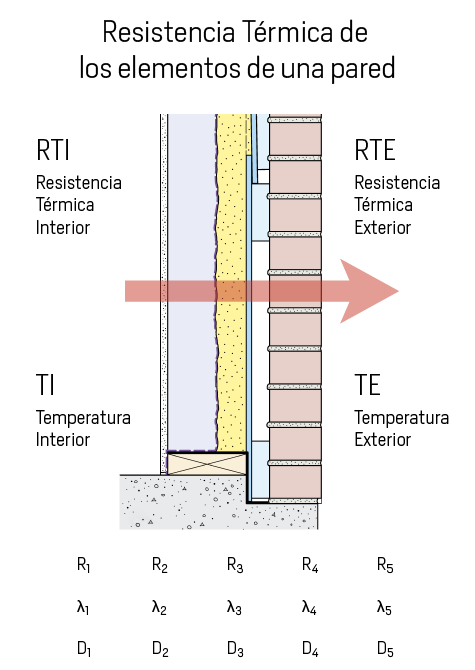
In practice, flat walls consisting of several layers of different materials are often encountered. The concept of thermal resistance can still be used in order to determine the rate of stationary heat transfer through those plane walls.
Example: Consider a flat wall that consists of two layers (such as a brick wall with one layer of insulation).
en: Resistencia a la conducción de la pared plana
Radiation resistance
Radiation resistance:
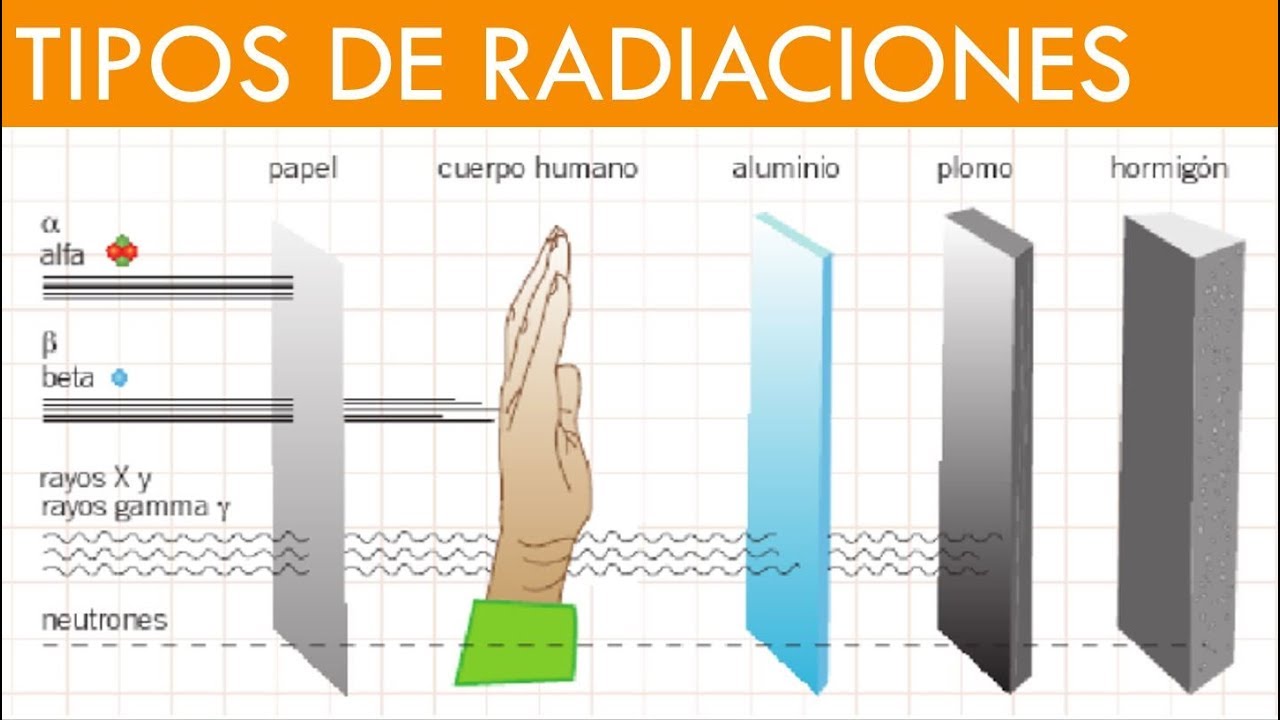
Radiation resistance is the act of manufacturing electronic components and systems that are resistant to damage or malfunction caused by ionizing radiation, such as those found in outer space, high-altitude flights , around nuclear reactors and particle accelerators or in nuclear accidents.
Example: One of the elementary thermal resistance relations is Rrad.
en: Resistencia a la radiación
Sphere conduction resistance
Conduction resistance (sphere):
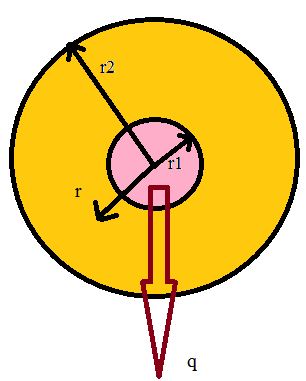
Consider heat conduction through a hollow sphere of inner radius r1, outer radius r2 and made of a material of constant thermal conductivity. The inner and outer surfaces are maintained at constant but different temperatures t1 and t2 respectively.
Example: One of the elementary thermal resistance relations is Rsph.
en: Resistencia a la conducción de la esfera
Surfaces
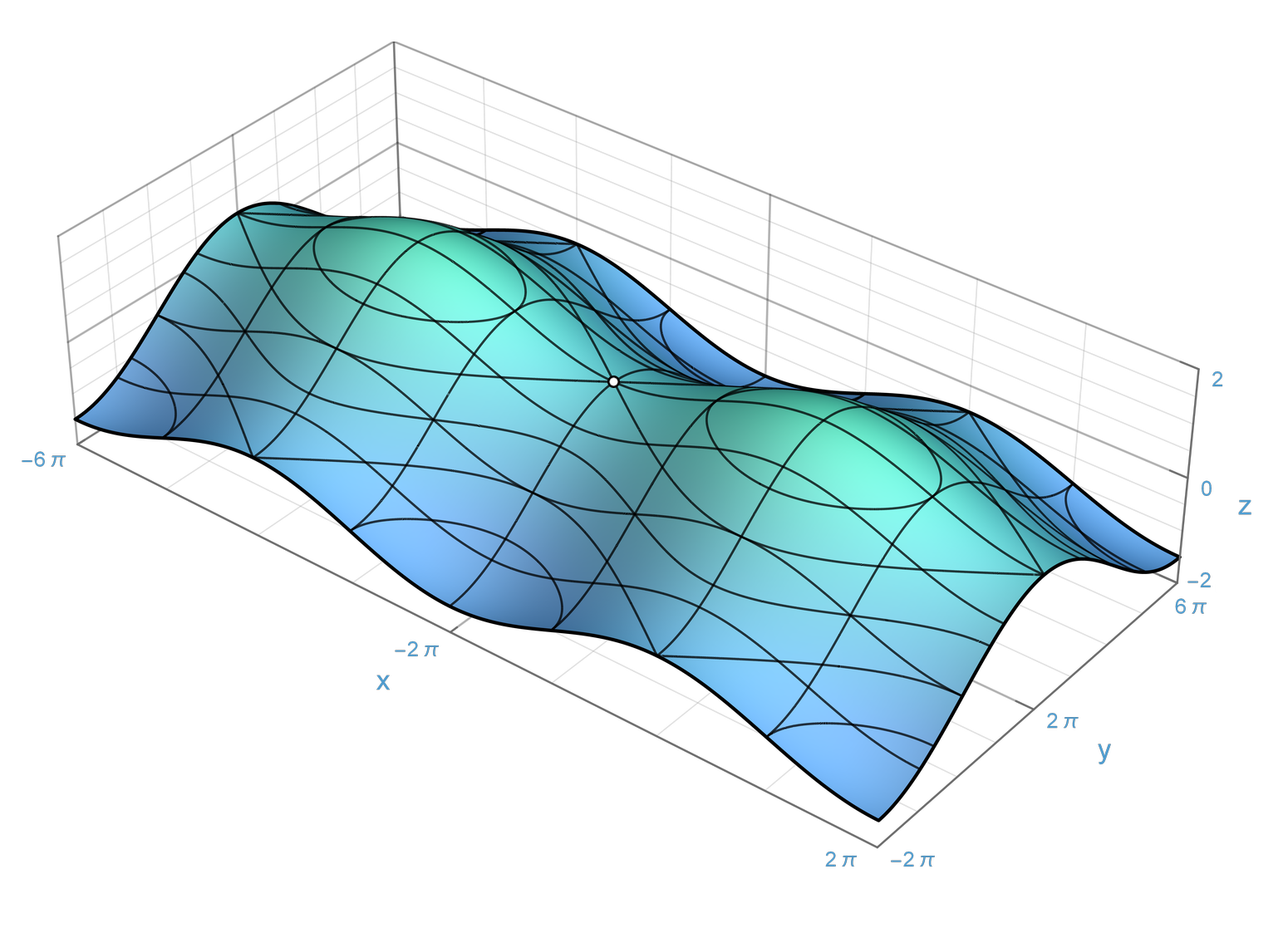
Certain multidimensional heat transfer problems involve two surfaces maintained at constant temperatures T1 and T2.
the outer face, outside, or exterior boundary of a thing; outermost or uppermost layer or area.
Example: a work surface
en: Superficies
Thermal contact conductance
where hc is the thermal contact conductance, Rc is the thermal contact resistance, and the radiation heat transfer coefficient is defined as
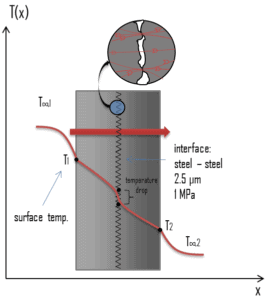
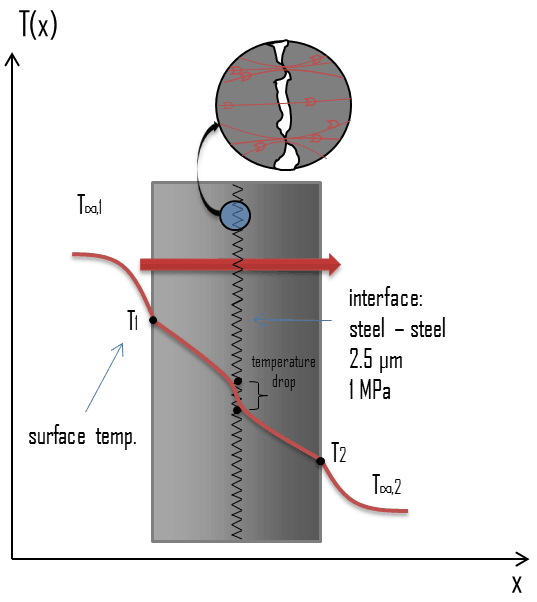
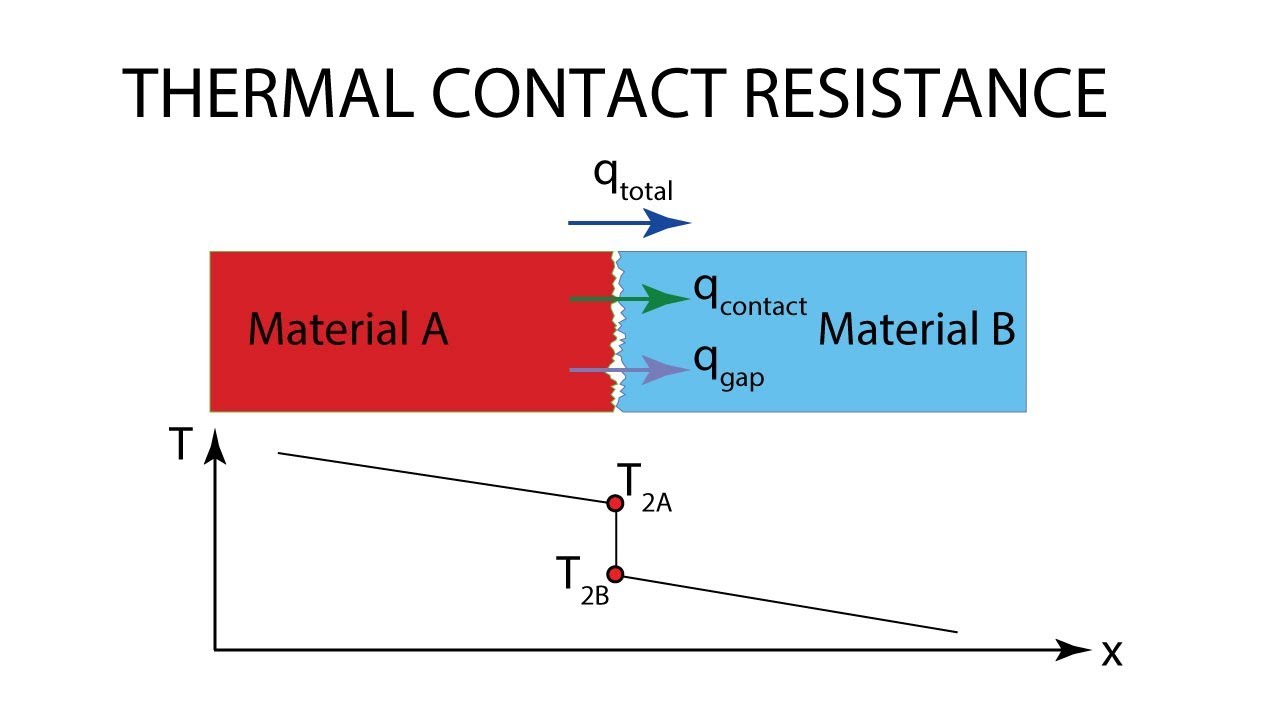
Is a property indicating the thermal conductivity, or ability to conduct heat, between two bodies in contact. The inverse of this property is termed thermal contact resistance.
Example: The thermal contact conductance for aluminum plates with a surface roughness of 10 μm placed in air with the interface pressure of 1 atm is hc = 3640 W/m2.K
en: Conductancia de contacto térmico
Thermal contact resistance
where hc is the thermal contact conductance, Rc is the thermal contact resistance, and the radiation heat transfer coefficient is defined as
Thermal contact resistance is defined as the ratio between this temperature drop and the average heat flow across the interface.
Example: Thermal contact resistance is always present in the interface between two solid surfaces.
en: Resistencia al contacto térmico
Total thermal resistance
Where Rtotal is the total thermal resistance between the two mediums.
Thermal resistance is the ability of a material to oppose the flow of heat.
Example: Engineers often use thermal resistance to calculate heat transfer through materials.