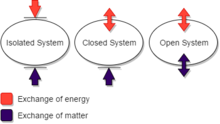
is a physical system that does not allow transfer of matter in or out of the system, though, in different contexts, such as physics, chemistry or engineering, the transfer of energy is or is not allowed.
Example: A system of fixed mass is called a closed system
es: Sistema cerrado
Conduction
noun
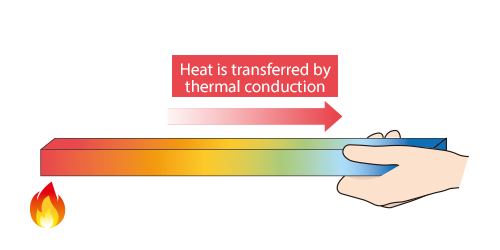
is the transfer of energy from the more energetic particles of a substance to the adjacent less energetic ones as a result of interactions between the particles
Example: Heat transfer from a solid to air is by CONDUCTION and partial convection.
es: Conducción
Consist of
verb
be composed or made up of
Example: the exhibition consists of 180 drawings"
es: Consiste en
Convection
noun
is the mode of heat transfer between a solid surface and the adjacent liquid or gas that is in motion, and involves the combined effects of conduction and fluid motion.
Example: he heat is transferred to the tin cans by CONVECTION conduction, or convection-conduction
es: Convección
Deal with
adjective
to be about (something) : to have (something) as a subject
Example: Her speech dealt with health care and the nation's economy.
es: Tratar con
Fixed mass
noun
Default mass amount of an object
Example: My brother's body has a body mass of 70%
es: Masa fija
Heat Transfer
noun
is the exchange of the sensible and latent forms of internal energy between two mediums as a result of a temperature difference
Example: “In Colima, nine months of winter, and three of hell."
es: Transferencia de calor
Inner surface
noun
Inner part of an object
Example: the inner surface of the globe is red
es: Superficie interior
Internal energy
noun
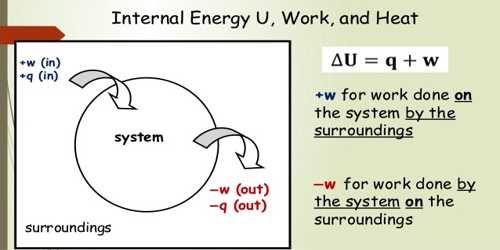
represents the molecular energy of a system, and it consists of sensible, latent, chemical, and
nuclear forms. The sensible and latent forms of internal energy can be transferred from one medium to another as a result of a
temperature difference, and are referred to as heat or thermal energy
Example: The sum of all forms of energy of a system is called total energy, and it includes the internal, kinetic, and potential energies.
es: Energía interna
Mass transfer
verb
he net movement of mass from one location, which generally means flow, phase, fraction, or component, to another.
Example: Mass transfer occurs in many processes, such as absorption, evaporation, drying, precipitation, membrane filtration, and distillation.
es: Transferencia de masa
Open system
verb
is a system that has external interactions. Such interactions can take the form of information, energy, or material transfers into or out of the system boundary, depending on the discipline which defines the concept.
Example: a system that involves mass transfer across its boundaries is called an open system or control volume
es: Sistema abierto
Outer surface
noun
The outermost part of a body that limits or separates it from its surroundings
Example: If the outer surface of the ham starts to blacken slightly, loosely tent with foil from the time this starts to happen.
es: Superficie exterior
Radiation
noun
is the energy emitted by matter in the form of electromagnetic waves (or photons) as a result of the changes in the electronic configurations of the atoms or molecules.
Example: A forest has an extinction coefficient for solar RADIATION ( k ) of 0.5.
es: Radiación
Total energy
noun
The total energy of a system is the sum of kinetic and gravitational potential energy, and this total energy is conserved in orbital motion.
Example: The sum of all forms of energy of a system is called total energy
es: Energía total
Undergo
verb
to experience something that is unpleasant or something that involves a change
Example: She underwent an operation on a tumour in her left lung last year.