My name is Adriane. I have been studying Acupuncture program for two semesters at Rosemont College. Acupuncture is a technique of Chinese Medicine that uses the needle to stimulate the body to heal itself. This technique is the only official biological technologies that’s works through energy to heal the body in Quebec. So, I made this glossary to help people know about this profession and to know some terms that the professionals use. There are 20 words of this field of study that you can see the definition of the word, an example of sentence with this word, the translation of the word, how we pronounce it and a linked image in this same orders. I used Virtual Writing Tutor and the book A Manual of Acupuncture by Peter Deadmen & Mazin Al-Khafaji with Kevin Baker (2016) to do this glossary. I hope that it can be helpful.
7 star needling
noun
also known as Plum Blossom Needling, is an acupuncture technique that uses an instrument with a flexible cord connected to a plastic head that has 7 small ones arranged in a circular shape.
Example: Before applying the 7 Star needles, it is necessary to clean the skin.
en: fleur de prunier
acupressure
noun
physical pressure is applied to acupuncture points or ashi trigger points with the aim of clearing blockages in these meridians. Pressure may be applied by hand, an elbow, or with various devices
Example: Acupressure is an alternative medicine technique often used in conjunction with acupuncture.
en: acupression
auriculotherapy
noun
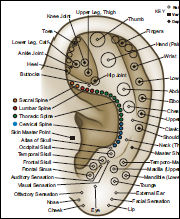
a form of acupuncture applied to points on the ear in order to treat other parts of the body.
Example: Auriculotherapy is a form of alternative medicine.
en: auriculothérapie
channels sinews
noun
the channel that connects the twelve meridians to tendons and muscles
Example: The twelve sinew channels circulate on the periphery of the body.
en: méridiens tendino-musculaires
cupping therapy
noum
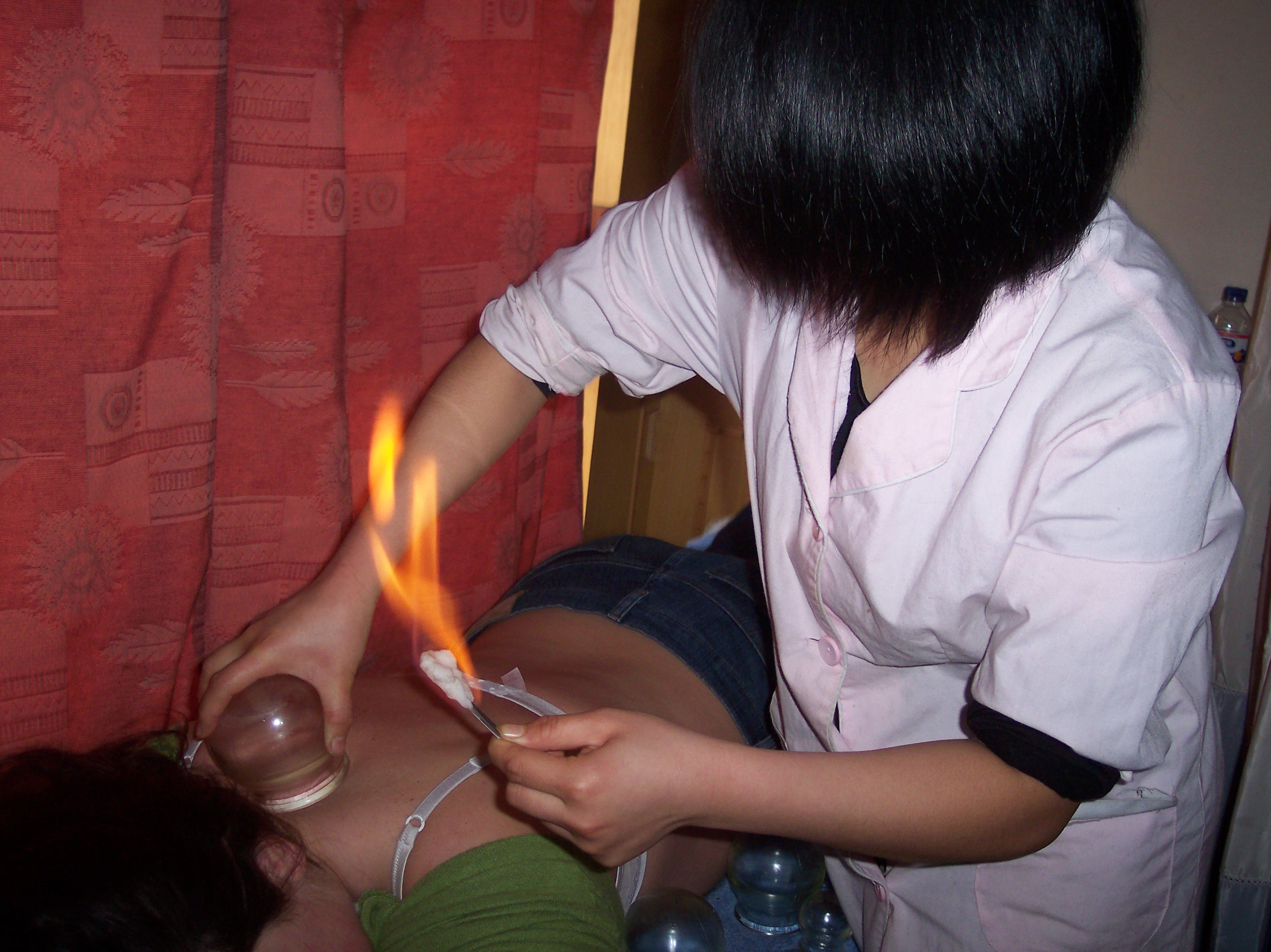
is a form of alternative medicine in which a local suction is created on the skin with the application of heated cups.
Example: Cupping therapy mobilizes blood flow to promote healing.
en: Thérapie par ventouses
cutaneous regions
noun
the sites on the body surface that reflect the twelve channels and the collaterals.
Example: Cutaneous regions manifest disorders of deep-lying channels.
en: régions cutanées
diagnostic
noun
concerned with the diagnosis of illness or other problems.
Example: The sweat test is diagnostic of cystic fibrosis.
en: Diagnostique
electroacupuncture
noun
is a form of acupuncture where a small electric current is passed between pairs of acupuncture needles.
Example: Electroacupuncture is good for treating pain.
en: électroacupuncture
etiology
noun
the cause, set of causes, or manner of causation of a disease or condition.
Example: A group of distinct diseases with different etiologies.
en: étiologie
extraordinary vessels
noun
eight meridians that regulate the 12 main meridians.
Example: The Extraordinary vessels are the Conception (Ren), the Governing (Du), the Penetrating (Dai), the Yin Motility (Yin Qiao), the Yang Motility (Yang Qiao), the Yin Linking(Yin Wei) and the Yang Linking (Yang Wei).
en: merveilleux vaisseaux
gua sha
noun
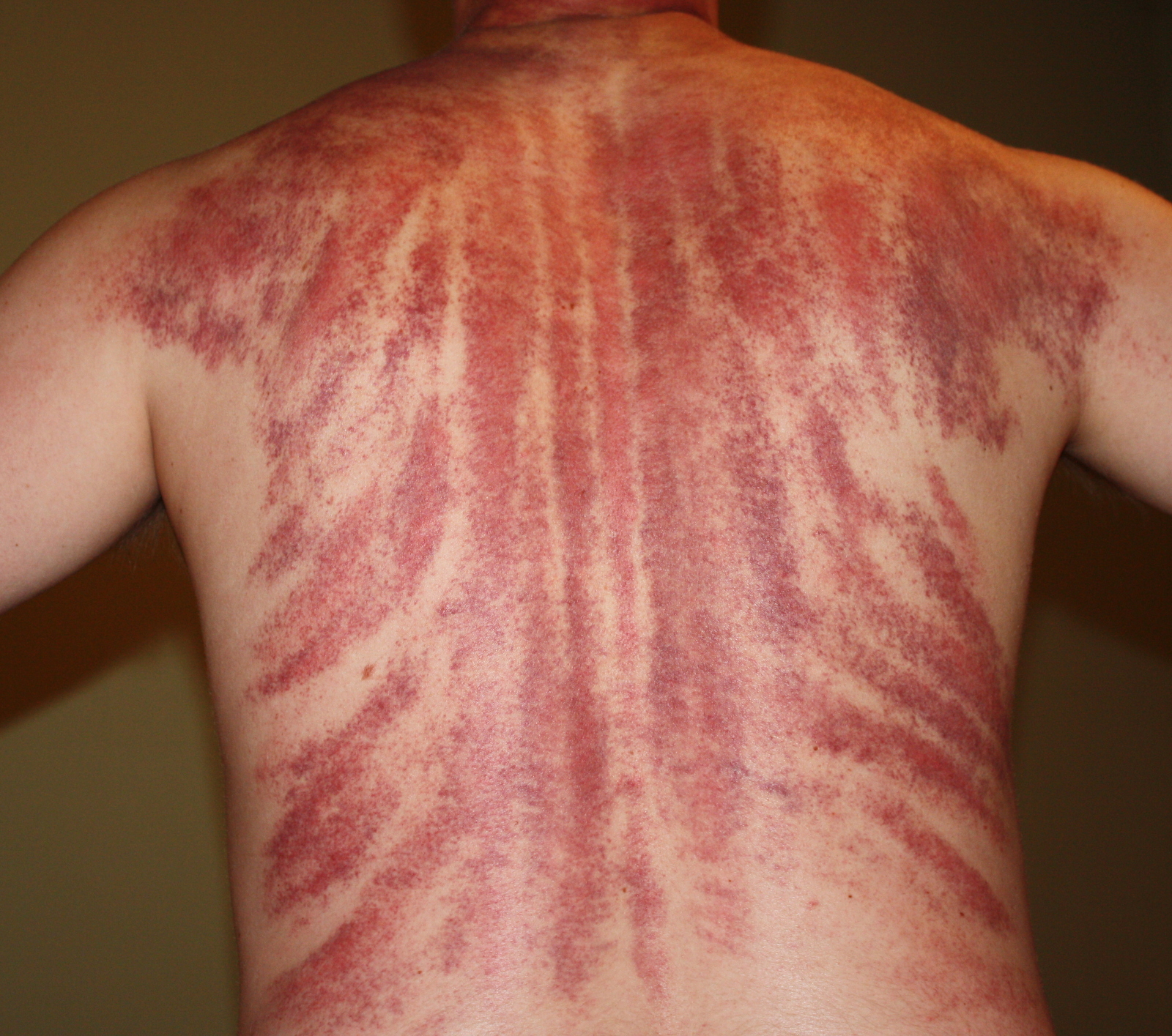
is a type of therapy that uses a smooth tool to scrape the skin.
Example: The gua sha Tool can be made of jade stone.
en: gua sha
luo-connecting channels
noun
also known as Collaterals. Branch of the primary channels and the extraordinary vessels that are distributed superficially over the body.
Example: The 15 luo-connecting channels are made up of twelve from the twelve primary channels, one each for the Conception and Governing vessels, and the great luo-connecting channel of the Spleen.
en: luò ou collatéralles
moxibustion
noun
the burning of moxa on or near a person's skin as a counterirritant.
Example: Moxibustion can be used in acupuncture treatment. It can be done near or over an acupuncture point.
en: moxibustion
palpation
noun
the act of examining a person or thing by touch, especially a patient in order to make a diagnosis
Example: Blood pressure:105 85mmHg HR: 70bpm Apyrexial Abdominal examination: On inspection: No scars palpation: Tenderness and guarding worse in the RIF, but no rebound tenderness.
en: palpation
physiology
noun
the branch of biology that deals with the normal functions of living organisms and their parts.
Example: Before 'modern psychology' began, psychology was mixture of elements of other disciplines such as philosophy and physiology.
en: physiologie
qi
noun
or energy, the circulating life force whose existence and properties are the basis of much Chinese philosophy and medicine.
Example: Qi cannot travel without a path, just as water flows or the sun and moon orbit without rest.
en: qi
twelve divergent channels.
noun
they are pathways that make internal linkages that may not be made by the primary channels.
Example: The twelve divergent channel distribute qi and bood to head and face.
en: méridiens distincts.
twelve primary channels.
noun
each of a sets of pathways in the body along which vital energy is said to flow. There are twelve such pathways associated with specific organs.
Example: The names of meridians are the Lung channel, the Large Intestine channel, the Stomach channel, the Spleen channel, the Heart channel, the Small Intestine channel, the Bladder channel, the Kidney channel, the Pericardium channel, the Sanjiao channel, the Gall Bladder channel, the Liver channel.
en: méridiens principaux
yang
noun
the active male principle of the universe, characterized as male and creative and associated with heaven, heat, and light.
Example: Korea's feminine mindset is also highly contradictory to the UK's masculine ideology and certainly impacts on approaches to managing human resources, especially in relation to the notion of Ying and yang, reflected in the workplace as an endeavour to achieve and maintain harmony, stability and continuity (Zhu & Warner, 2004).
en: yang
yin
noun
the passive female principle of the universe, characterized as female and sustaining and associated with earth, dark, and cold.
Example: This duality underpins most of the rest of the cosmology, in a way similar to other philosophies at the time in India and China, for example the Bhagavad Gita teaches "These two, light and darkness, are the world's eternal ways" and the first principles of manifestation in China are yang and yin , often represented as light and darkness.