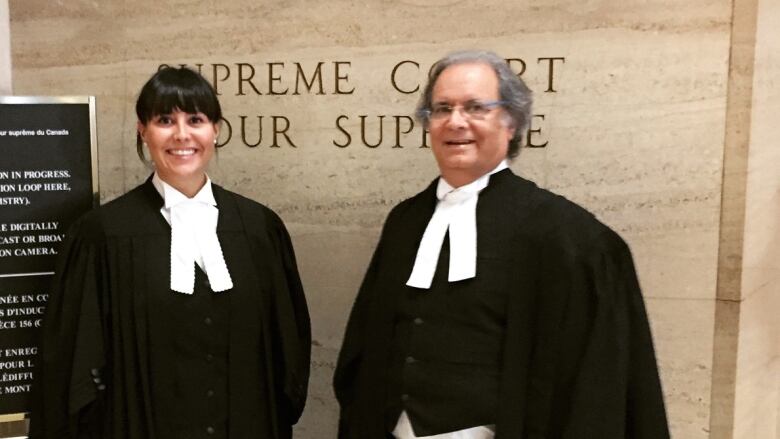
I just started my forth semester in Paralegal Technology. This glossary will be helpful with my field of study.
Civil Code of Quebec
noun
The Civil Code of Quebec, in harmony with the Charter of human rights and freedoms (chapter C-12) and the general principles of law, governs people, relations between people, and property.
The Civil Code comprises a body of rules which, in all matters within the letter, spirit or object of its provisions, lays down the jus commune, expressly or by implication. In these matters, the Code is the foundation of all other laws, although other laws may complement the Code or make exceptions to it.
fr: Code civil du Québec
common law
noun
Common law is defined as a body of legal rules that have been made by judges as they issue rulings on cases, as opposed to rules and laws made by the legislature or in official statutes. An example of common law is a rule that a judge made that says that people have a duty to read contracts.
Example: On appeal, however, the Court of Appeal found that the mischief, that the county court's jurisdiction cannot extend to contempts outside of the courtroom, was already provided for by the COMMON LAW.
fr: common law
constitutional law
noun
Constitutional law is a body of law which defines the role, powers, and structure of different entities within a state, namely, the executive, the parliament or legislature, and the judiciary; as well as the basic rights of citizens and, in federal countries such as the United States and Canada, the relationship between the central government and state, provincial, or territorial governments.
Example: Since the monarch was seen as God's ordained agent on earth, any challenge to the supremacy of the Church would only to serve the King's position as an absolute monarch, which was precisely what happened in 1789 (King Louis XVI by the grace of God, King of France now became Louis, by the Grace of God and the CONSTITUTIONAL LAW of the state, the King of the French).
fr: loi constitutionnelle
contract
noun
A written or spoken agreement, especially one concerning employment, sales, or tenancy, that is intended to be enforceable by law.
Example: There is a need to CONTRACT with the bank about securities to the loan, which will again require extra efforts and result in costs incurred by the lawyers of Allisgood plc.
fr: contrat
court
noun
A tribunal presided over by a judge, judges, or a magistrate in civil and criminal cases.
Example: In the 1960s Black children in America were segregated from their white classmates on the basis of lower intelligence test scores.
Some parents of these children took the education authorities to COURT to prevent their children being labelled as 'retarded' (Fancher, 1985).
fr: tribunal
court order
noun
A direction issued by a court or a judge requiring a person to do or not do something.
Example: Now there are three ways for an unmarried father to acquire parental responsibility: by parental responsibility agreement endorsed by the court; a COURT ORDER of parental responsibility; or joint birth registration.
fr: ordonnance du tribunal
courthouse
noun
A courthouse is a building that is home to a local court of law and often the regional county government as well, although this is not the case in some larger cities.
Example: Another example is the British victory at Guliford COURTHOUSE, "But like so many British victories it was won at disproportionate cost, " just like that at bunker hill which cost the British 1,054 men compared to around 400 colonial casualties.
fr: palais de justice
criminal code
noun
The Criminal Code is a law that codifies most criminal offenses and procedures in Canada. Its official longs title is "An Act respecting the criminal law" (R.S.C. 1985, c. C-46, as amended).
Example: The Canadian Draft CRIMINAL CODE proposed that the maximum penalty for an assister with mere knowledge should not exceed half the maximum term provided for the perpetrator.
fr: code criminel
custody
noun
The protective care or guardianship of someone or something.
Example: As s.118 provides for the offender to be taken into CUSTODY, the judge felt his authority was restricted to committals for contempts made in the face of the court.
fr: detention
denunciation
noun
The action of informing against someone.
Example: Refusal to support the Provisional Government and DENUNCIATION of the leaders of the other Soviet parties... meant that... should the masses become disillusioned with their parties, they would know where to go.
fr: dénonciation
dismiss
verb
Dismiss means to let go. If a judge dismisses a case, it means he's saying it has no merit, and is throwing it out of court.
Example: To conclude, our present question may be answered in two parts; though the doctrine of privity has contributed to its share of injustices in the pre-reform years, it is difficult to DISMISS it as strictly unnecessary.
fr: renvoyer
docket
noun
A calendar or list of cases for trial or people having cases pending.
fr: rôle
doctrine
noun
A rule or principle or the law established through the repeated application of legal precedents. A rule or principle of the law established through the repeated application of legal precedents.
Example: The parties' intention at the time of, or subsequent to the purchase has to be taken into account to determine the size of the beneficial interest.
COMMENT: This case mainly deals with the DOCTRINE of constructive trusts.
fr: doctrine
expert witness
noun
A person who is permitted to testify at a trial because of special knowledge or proficiency in a particular field that is relevant to the case.
fr: témoin expert
guilty
adjective
Culpable of or responsible for a specified wrongdoing.
Example: The case was concerned with the interpretation of s.118 of the County Courts Act 1984, relating to the powers of the county court to protect its witnesses by punishment of those GUILTY of contempt of court.
fr: coupable
injunction
noun
An authoritative warning or order.
Example: Friendship is also an important part of Judaeo-Christian theology that corresponds to the biblical INJUNCTION to 'love thy neighbour' located at Matthew 21:39.
fr: injonction
inmate
noun
A person confined to an institution such as a prison or hospital.
fr: détenu
judge
noun
A public official appointed to decide cases in a court of law.
Example: In his interpretation of the statute, the trial JUDGE was guided by the general presumptions against deprivation of liberty and alteration of the common law.
fr: juge
jurisprudence
noun
Jurisprudence or legal theory is the theoretical study of law. Scholars of jurisprudence seek to explain the nature of law in its most general form and provide a deeper understanding of legal reasoning, legal systems, legal institutions, and the role of law in society.
Example: However, she believed that the 'general tenor of [their] JURISPRUDENCE' was different to that of which was established by the majority.
fr: jurisprudence
jurist
noun
An expert in or writer on law.
Example: It was considered the cornerstone of legal thought, but as a JURIST Maine accused its content as artificial.
fr: juriste
justice
noun
Just behavior or treatment.
Example: A literal reading of s.118 was not taken to conflict with the intention of providing the county court with the jurisdiction to protect its witnesses and hence ensure JUSTICE within its proceedings.
fr: justice
law
noun
The system of rules which a particular country or community recognizes as regulating the actions of its members and which it may enforce by the imposition of penalties.
Example: What lessons should criminal justice and LAW enforcement learn from the bio-behavioural account of antisocial personality disorder?
fr: loi
lawyer
noun
A lawyer is a professional who is qualified to offer advice about the law or represent someone in legal matters.
Example: Michael Storfer (Director)- an investor of Fresh Breath and an experienced chartered accountant.
He is also a LAWYER and auditor.
fr: avocat
mediation
noun
Intervention in a dispute in order to resolve it; arbitration.
Example: Although Part II allowed for a no-fault divorce, it requested MEDIATION and a period for "reflection and consideration", attempting to reduce the divorce rate.
fr: médiation
notary
noun
A person authorized to perform certain legal formalities, especially to draw up or certify contracts, deeds, and other documents for use in other jurisdictions.
Example: Rousseau's father was a watchmaker, Voltaire was the son of a NOTARY, and Montesquieu was 'a magistrate in the parlement of Bordeaux, a feudal lord living in a moated castle and an apologist for noble power.".
fr: notaire
prejudice
noun
Harm or injury that results or may result from some action or judgment.
Example: The Law Society, Bowman v Fels Guidance, 13 September 2005, pp.8 ibid Proceeds of Crime Act 2002, section 333, see: infra The tipping off offence is committed where following a report to the SOCA someone "makes a disclosure which is likely to PREJUDICE any investigation ".
fr: préjudice
probation
noun
The release of an offender from detention, subject to a period of good behavior under supervision.
fr: probation
thief
noun
A person who steals another person's property, especially by stealth and without using force or violence.
Example: If a man is naturally inclined to be a THIEF, or his environment encourages him to steal, this disposition arises from natural causation.
fr: voleur
trial
noun
A formal examination of evidence before a judge, and typically before a jury, in order to decide guilt in a case of criminal or civil proceedings.
Example: In his interpretation of the statute, the TRIAL judge was guided by the general presumptions against deprivation of liberty and alteration of the common law.
fr: procès
trust
noun
Firm belief in the reliability, truth, ability, or strength of someone or something.
Example: It suspended the anti-TRUST laws and enabled the formation of codes of fair competition for the nations trade and industries.
fr: confiance
weapon
noun
A thing designed or used for inflicting bodily harm or physical damage.
Example: Or a discussion of the consequences of advanced WEAPON technology and an increase in transnational conflict involving non-state actors, see: Program on Humanitarian Policy and Conflict Research, Transnationality, War and the Law (2006) Harvard University <> at 5 January 2007.
fr: arme
witness
noun
A person who sees an event, typically a crime or accident, take place.
Example: This essay shall consider the court's reasoning behind its decision on the two material facts of the case: The contempt occurred when the WITNESS was returning from the court Although s.118(a) of the CCA 1984 provides for power to commit for a contempt which occurs 'in going to or returning from the court', the trial judge felt bound by the conflicting limitation of s.1(2), which stipulates that county courts, as inferior courts of record, only have the power to commit for contempt 'in the face of the court.