Hi! My name is Charles-Olivier and I'm a student in a program called Paralegal Technology. I'm currently in my second year in this program. This glossary is made for people who don't really know words that are related to law. I want to be a lawyer in my future and I really want yo help people understand things that they should know.
This glossary contains 25 words that are related to my field of study. I used the Virtual Writing Tutor to find the words for this glossary and found the definitions on the Internet.
After reading and understanding all these terms, I want you yo be able to understand more your rights as a citizen and you'll be able ton find more information about you can do and what you can't do.
Administrative law
Noun and adjective
the body of law that regulates the operation and procedures of government agencies.
Example: Stewart, C., 'Tragic choices and the role of administrative law.
en: Loi administrative
Advocacy
Noun
Advocacy is defined as any action that speaks in favor of, recommends, argues for a cause, supports or defends, or pleads on behalf of others.
Example: In an attempt to narrow this gap, housing rights advocates around the world have pursued a variety of human rights strategies in domestic settings, such as community mobilization, political campaigning for domestic legislative reform, advocacy before regional and international bodies, and legal challenges before courts of all jurisdictions.
en: Plaidoyer
Arbitration
Noun
Arbitration is a procedure in which a dispute is submitted, by agreement of the parties, to one or more arbitrators who make a binding decision on the dispute. In choosing arbitration, the parties opt for a private dispute resolution procedure instead of going to court.
Example: The applicability of lex mercatoria as "law" in litigation has been questioned many times; the debate being mainly focussed on arbitration but also includes doubts to its applicability in state courts and state conflict of laws.
en: Arbitrage
Case
Noun
a suit or action in law or equity.
Example: The latest case is of a famous actor who has been brutally murdered in his home.
en: Cas
Civil law
Noun and adjective
Civil law is the part of a country's set of laws which is concerned with the private affairs of citizens, for example, marriage and property ownership, rather than with crime.
Or
Civil law is a legal system originating in mainland Europe and adopted in much of the world.
Example: To this end, property rights are rooted in natural law, as civil law cannot restrict these natural rights of man.
Or
However, moral rights only hold real authority on the continent, in countries like France which maintain a civil law system.
en: Droit civil
Common law
Noun and adjective
Common law is a body of unwritten laws based on legal precedents established by the courts. Common law influences the decision-making process in unusual cases where the outcome cannot be determined based on existing statutes or written rules of law. The U.S. common-law system evolved from a British tradition that spread to North America during the 17th- and 18th-century colonial period.
Example: In his interpretation of the statute, the trial judge was guided by the general presumptions against deprivation of liberty and alteration of the common law.
en: Loi commune
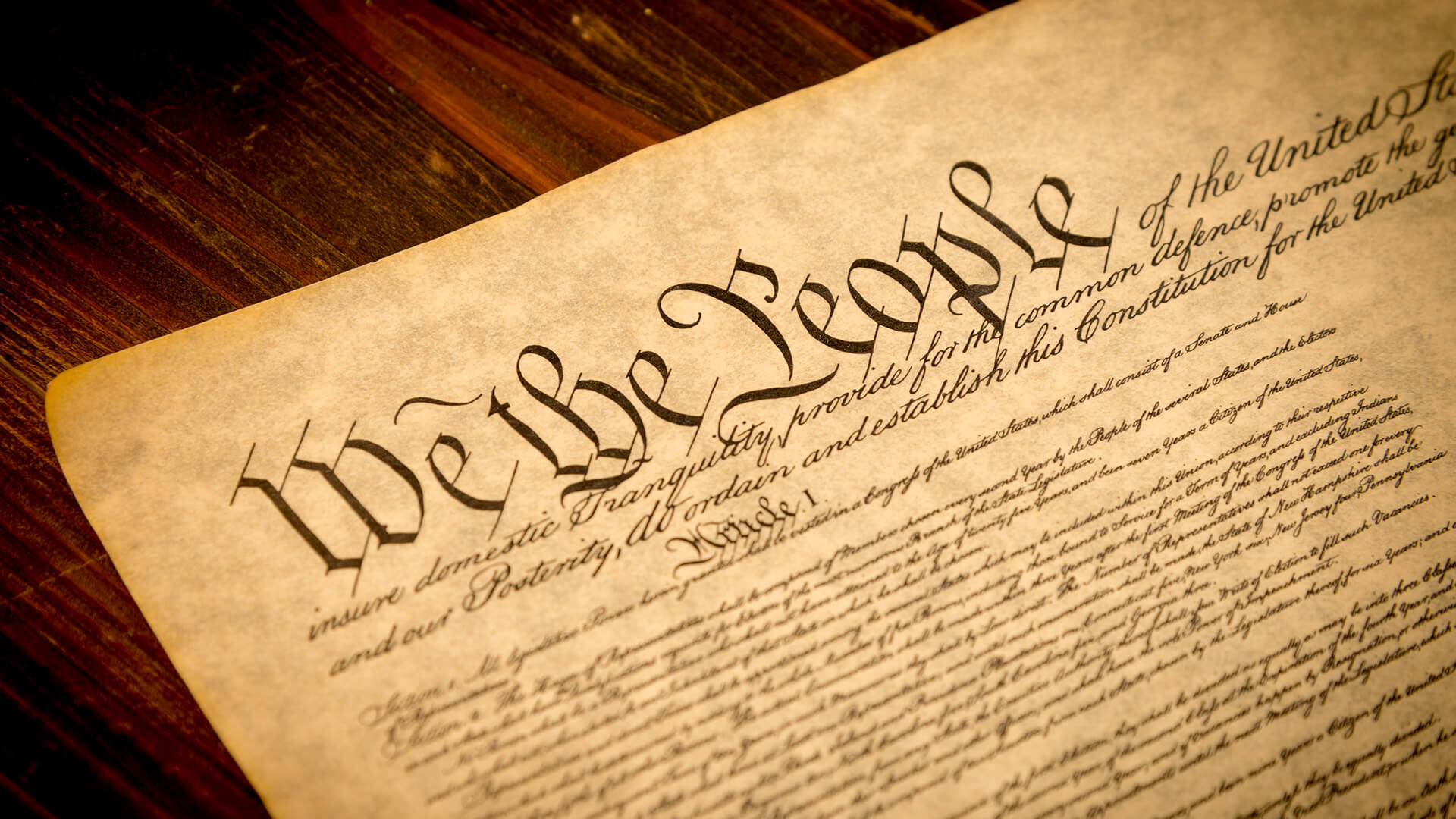
Constitution
Noun
the basic principles and laws of a nation, state, or social group that determine the powers and duties of the government and guarantee certain rights to the people in it.
Example: Kavanagh is deeply critical of this effect has on the constitution and commends the decision in Wilson.
en: Constitution
Court
Noun
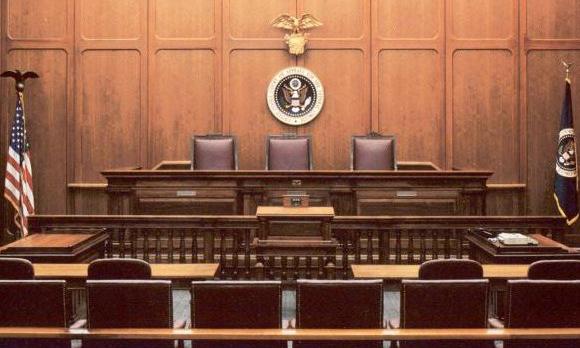
A court is a place where legal matters are decided by a judge and jury or by a magistrate.
Example: As s.118 provides for the offender to be taken into custody, the judge felt his authority was restricted to committals for contempts made in the face of the court.
en: Tribunal
Criminal
Noun
a person who has committed a crime.
Example: Belmayne finds himself slowly drawn to Marie, battling with his conscious about wanting to find the criminal and wanting to fall for her.
en: Criminel
Doctrine
Noun
A legal doctrine is a framework, set of rules, procedural steps, or test, often established through precedent in the common law, through which judgments can be determined in a given legal case.
Example: This case mainly deals with the doctrine of constructive trusts.
en: Doctrine
Judge
Noun
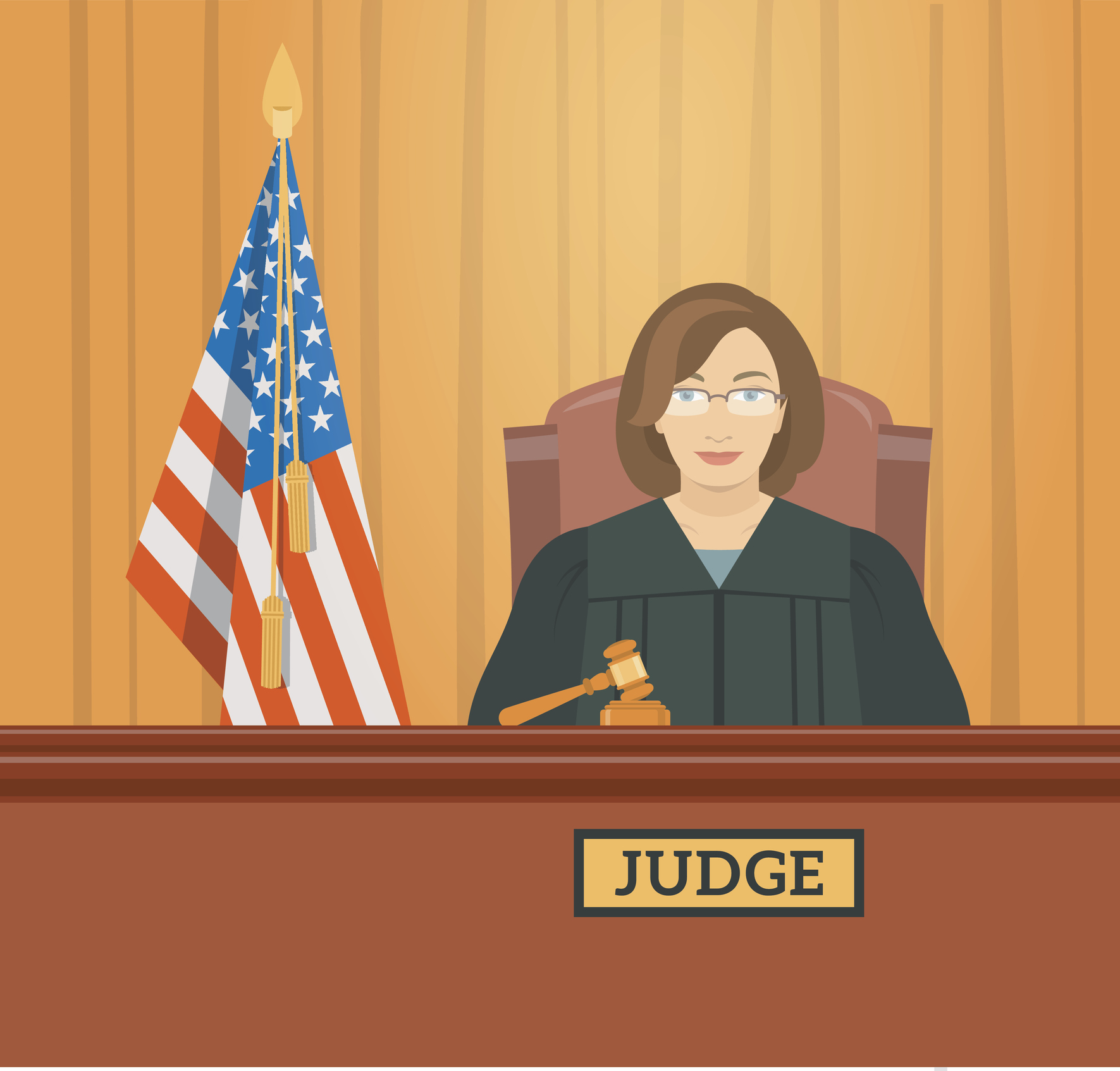
a public official appointed to decide cases in a court of law.
Example: As s.118 provides for the offender to be taken into custody, the judge felt his authority was restricted to committals for contempts made in the face of the court.
en: Juge
Justice
Noun
the administration of law and the quality of being just, impartial, or fair.
Example: A literal reading of s.118 was not taken to conflict with the intention of providing the county court with the jurisdiction to protect its witnesses and hence ensure justice within its proceedings.
en: Justice
Law
Noun
the system of rules which a particular country or community recognizes as regulating the actions of its members and which it may enforce by the imposition of penalties.
Example: Firstly, it is suggested that Executive powers and prerogatives should be subjected to the rule of law and that freedom of information and open government should be established.
en: Droit
Legislature
Noun
A legislature is a deliberative assembly with the authority to make laws for a political entity such as a country or city.
Example: Purposive Approach - This approach suggests the judge can look at words outside the statute to give effect to the true intention of the legislature.
en: Législature
Litigation
Noun
the act, process, or practice of settling a dispute in a court of law.
Example: ARGUMENTS AGAINST THE USE OF HANSARD But there is one major drawback of the use of Hansard addressed by almost all the judges and other critics time and again, which is that the use of Hansard greatly increases the cost of litigation.
en: Litige
Precedent
Noun
The Supreme Court relies on precedents—that is, earlier laws or decisions that provide some example or rule to guide them in the case they're actually deciding.
Example: As their reasoning forms a precedent for future cases, when faced with a new point of controversy within a statute, theoretically the courts should seek an interpretation corresponding to the parliamentary intention behind that statute.
en: Jurisprudence
Private law
Noun and adjective
a branch of the law that deals with the relations between individuals or institutions, rather than relations between these and the government.
Example: Lord Diplock, in Swain v Law Society [1983], described the doctrine as "an anachronistic shortcoming that for many years has been regarded as a reproach to English private law".
en: Droit privé
Public law
Noun and adjective
the law of relationships between individuals and the government.
Example: Held sets out a similar notion when he claims that 'the principle of autonomy entrenched in democratic public law is not an individualistic principle of self-determination, but a structural principle of self determination' where the 'self' is part of the 'majority' enabled and constrained by the rules and procedures of democratic life.
en: Droit public
Rule
Noun
one of a set of explicit or understood regulations or principles governing conduct within a particular activity or sphere.
Example: The one exception to this rule concerns the 'medical papyri' but often this appears to be allowed since no one papyrus is either solely 'magical' without accompanying prescriptions or anatomical works.
en: Règlement
Witness
Noun
one that gives evidence. specifically : one who testifies in a cause or before a judicial tribunal.
Example: This essay shall consider the court's reasoning behind its decision on the two material facts of the case: The contempt occurred when the witness was returning from the court...