I'm a student and I have been learning Psychology in Social Sciences for two years already. This glossary contains some familiar notions or words used in Psychology. The words in this glossary can be basic notions or vocabulary commonly used in this field. It can help students who are studying psychology or people who just want to learn more about this topic for their own enjoyment. By learning and interacting with these words, you might learn more or it might be helpful as you go.
Anxiety
noun
An emotion characterized by feelings of tension, worried thoughts and physical changes like increased blood pressure. People with anxiety disorders usually have recurring intrusive thoughts or concerns.
Example: Similarly, many clinical staff are reluctant to deal with emotional issues such as, anxiety and depression because they feel they lack the skills to deal with them competently.
en: anxiété
Attitude
noun
A settled way of thinking or feeling about someone or something, typically one that is reflected in a person's behavior.
Example: She took a tough attitude toward other people's indulgences.
en: attitude
Behaviorism
noun
The theory that human and animal behavior can be explained in terms of conditioning, without appeal to thoughts or feelings, and that psychological disorders are best treated by altering behavior patterns.
Example: However, in the limited space provided, this essay examines how Cognitivism, behaviorism and Constructivism view the role of L1, input and output in SLA and analyzes how these key issues explain certain features of my learning of Persian such as the course-book design, grammar and vocabulary.
en: Behaviorisme
Cerebrum
noun
Principal and most anterior part of the brain in vertebrates, located in the front area of the skull and consisting of two hemispheres, left and right, separated by a fissure. It is responsible for the integration of complex sensory and neural functions and the initiation and coordination of voluntary activity in the body.
Example: The region most sensitive to ICSS is the medial forebrain bundle (MFB), which traverses the hypothalamus and connects the brainstem and the central grey matter of the midbrain with sites in the cerebrum.
en: Cerveau
Clinical psychology
noun
Clinical psychology is the psychological specialty that provides continuing and comprehensive mental and behavioral health care for individuals and families; consultation to agencies and communities; training, education and supervision; and research-based practice.
Example: Identifying, understanding, and treating Cluster B personality disorders is a matter of clinical psychology.
en: Psychologie clinique
Cognitive psychology
noun
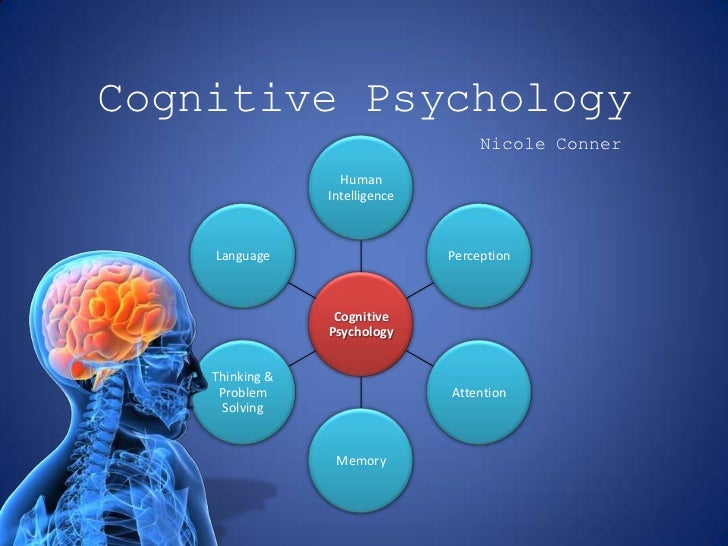
Cognitive psychology involves the study of internal mental processes—all of the things that go on inside your brain, including perception, thinking, memory, attention, language, problem-solving, and learning.
Example: In response to this view, that rejects abstract and invisible factors affecting human behaviour, the phenomenologists separated psychology into cognitive psychology and social psychology.
en: Psychologie cognitive
Comportment
noun
Personal bearing or conduct; demeanor; behavior.
Example: He displayed the comportment expected of the rightful king.
en: Comportement
Experimental psychology
noun
Scientific and empirical approach to the study of the mind. This approach means that tests are administered to participants, with both control and experimental conditions.
Example: In the Attachment and Loss trilogy (1969, 1973 & 1980), there is evidence to show that Bowlby has integrated ideas from such a wide range of fields as psychoanalysis, ethology, experimental psychology and learning theory among other sources.
en: Psychologie expérimentale
Freudian psychoanalysis
noun
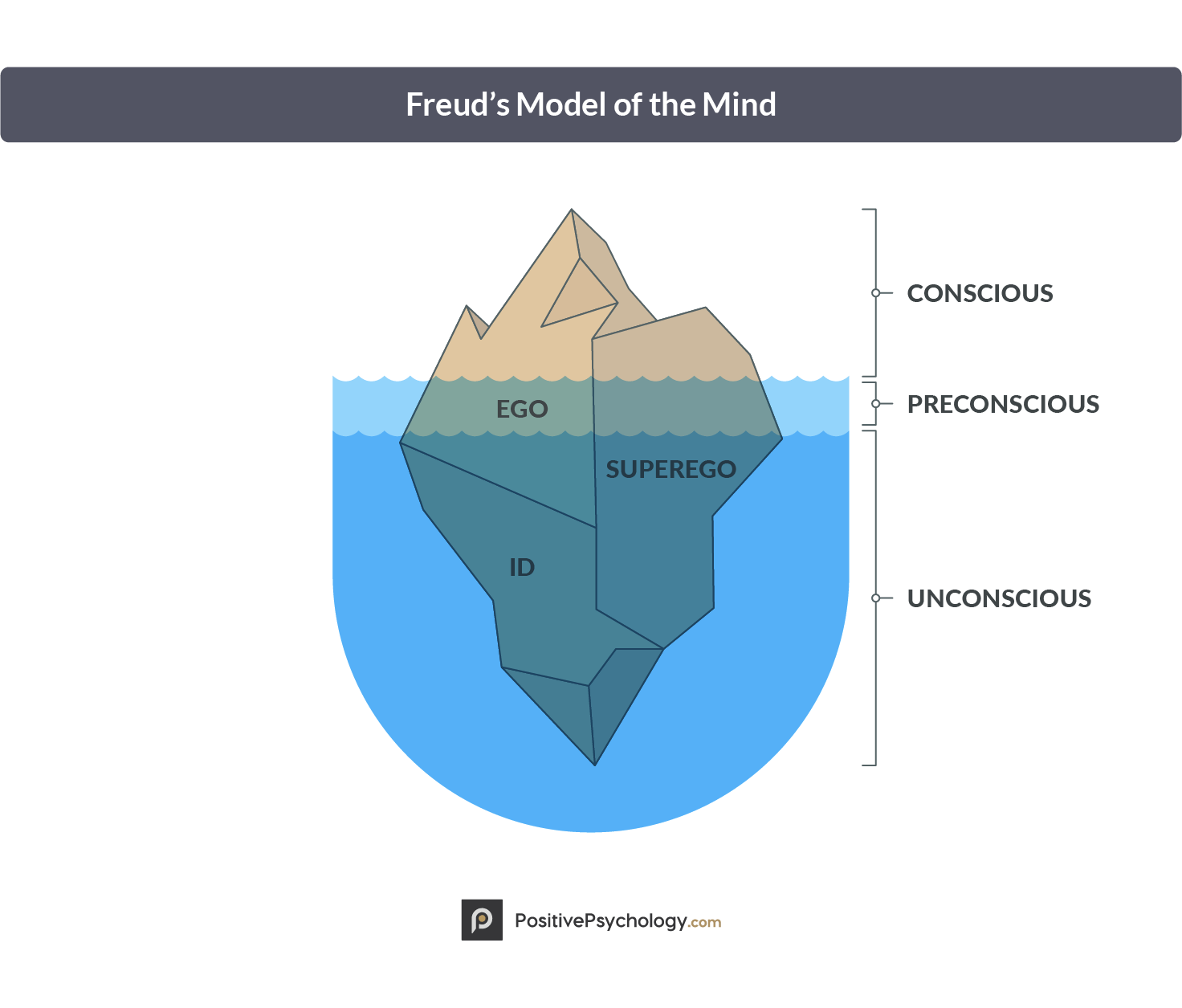
A method of treatment and a way of understanding the mind, based on Freud's ideas. In his version of treatment, mental illness is thought to be largely rooted in the unconscious, and the psychoanalyst plays a part in bringing pathological mental processes into consciousness.
Example: This experience is a prime example of psychoanalysis because it shows how a childhood experience still affects my behavior today.
en: Psychanalyse freudienne
Humanistic psychology
noun
Humanistic psychology is a perspective that emphasizes looking at the whole individual and stresses concepts such as free will, self-efficacy, and self-actualization.
Example: Group therapy for families is an example of a humanistic psychology approach.
en: Psychologie humaniste
Neuron
noun
Neurons (also called neurones or nerve cells) are the fundamental units of the brain and nervous system, the cells responsible for receiving sensory input from the external world, for sending motor commands to our muscles, and for transforming and relaying the electrical signals at every step in between.
Example: Rates of sodium-potassium exchange are controlled by ECF sodium concentrations therefore hyponatraemia reduces the rate of exchange interrupting normal neuron function.
en: Neurone
Neuropsychology
noun
The study of the relationship between behavior, emotion, and cognition on the one hand, and brain function on the other.
Example: Injuries to the brain can cause a wide variety of symptoms. A neuropsychologist can help determine how an injury affects functions like reasoning or problem solving skills.
en: Neuropsychologie
Personality
noun
The combination of characteristics or qualities that form an individual's distinctive character.
Example: The client received a formal diagnosis at the age of 33 of "probable Schizophrenia with paranoid attitude"; prior to this, psychiatrists had thought that he had a psychopathic personality due to a disturbed and insecure childhood.
en: Personnalité
Preconscious
noun
The part of the mind in which preconscious thoughts or memories reside.
Example: While most other non dual systems theories concentrate on processes which are based on logic and the application of a hierarchical structure, the associative system stands out as being able to account for preconscious processes which do not seem to involve analytic intelligence.
en: Préconscient
Psychology
noun
The scientific study of the human mind and its functions, especially those affecting behavior in a given context.
Example: A critic of the book, professor in psychology Robert Sternberg reacts as follows: 'I think that there is definitely some heritability of intelligence in the White population'.
en: Psychologie
Psychotherapy
noun
The treatment of mental disorder by psychological rather than medical means.
Example: Freud, Jung, Alder and Erikson developed psychoanalytic theories focused on case studies of patients in the clinical context of psychotherapy.
en: Psychothérapie
Stimulus
noun
A thing or event that evokes a specific functional reaction in an organ or tissue.
Example: Cork balls have been substituted for ova, which the infundibulum then catches, resulting in eggs that contain cork instead of the yolk showing that the ampula does not have any recognition functions, and responds to any stimulus.
en: Stimulus
Therapy
noun
The treatment of mental or psychological disorders by psychological means.
Example: After years of unproductive therapy Freud believed that the key to Wolf-Man's condition lay in a dream he had just before he was four.
en: Thérapie
Unconscious
noun
The part of the mind which is inaccessible to the conscious mind but which affects behavior and emotions.
Example: The distinctions that have emerged in recent years between pleasure and desire, and between conscious and unconscious (or "core") aspects of these emotive processes are considered, as is their distinct functional anatomy.

/What-Is-Behaviorism-in-Psychology-4171770-final-v2-0c089813f8ad421f906305fe9db01aeb.png)