This glossary can help you translate medical terms to be able to get the right information from your patient, so you'll be able to give the best treatments.
airway
noun
The passage by which air reaches a person’s lungs.
Example: Obstruction of the airways by any object prevents air from reaching the lungs and can cause death.
fr: voies respiratoires
allergy
noun
A damaging immune response by the body to a substance, esp. Pollen, fur, a particular food, or dust, to which it has become hypersensitive.
Example: The peanut allergy is one of the more common food allergies.
fr: allergie
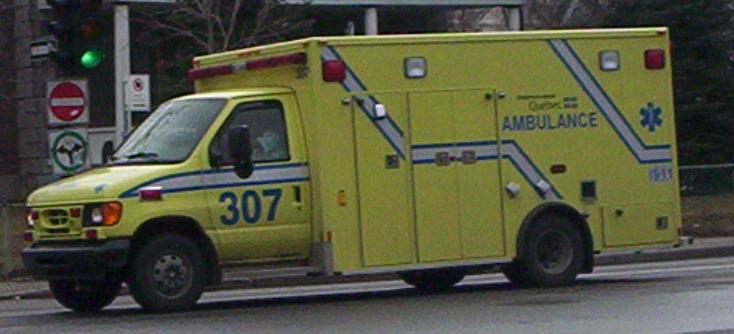
ambulance
noun
A vehicle specially equipped for taking sick or injured people to and from the hospital, especially in emergencies.
Example: When I had my car accident, I had to go to the hospital by ambulance.
fr: ambulance
anaphylactic shock
noun
Exaggerated allergic reaction that can lead to death.
Example: Without epinephrine, the patient would have already died of anaphylactic shock.
fr: choc anaphylactique
angina
noun
A condition marked by severe pain in the chest, often also spreading to the shoulders, arms, and neck, caused by an inadequate blood supply to the heart.
Example: The man had chest pain before he was diagnosed with angina.
fr: angine
antecedents
noun
The history, events, characteristics, etc., of one’s earlier life.
Example: The paramedics asked me if I had antecedents of heart problems.
fr: antécédents
apnea
noun
Temporary cessation of breathing, especially during sleeps.
Example: I stopped breathing, I was in apnea.
fr: apnée
arrhythmia
noun
A condition in which the heart beats with an irregular or abnormal rhythm.
Example: With cardiac monitoring, professionals have detected an arrhythmia.
fr: arythmie
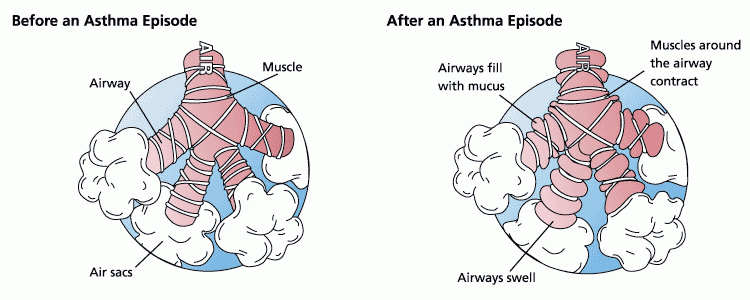
asthma
noun
A respiratory condition marked by spasms in the bronchi of the lungs, causing difficulty in breathing. It usually results from an allergic reaction or other forms of hypersensitivity.
Example: When I do sports, I have to take Ventolin because I have asthma.
fr: asthme
asystole
noun
A condition in which the heart no longer beats and usually cannot be restarted.
Example: The patient was in asystole, the paramedics were unable to save him.
fr: Asystolie
bandage
noun
A strip of material used to bind a wound or to protect an injured part of the body.
Example: The patient was bleeding from the leg. The paramedics had to put a bandage on it.
fr: bandage
blood pressure
noun
The pressure of the blood in the circulatory system, often measured for diagnosis since it is closely related to the force and rate of the heartbeat and the diameter and elasticity of the arterial walls.
Example: The pharmacist took my blood pressure. It was 120/80.
fr: pression artérielle
bradycardic
noun
A slowing of the heart rate to less than 50 beats per minute.
Example: His pulse rate was 49 bpm, he was bradycardic.
fr: bradycardie
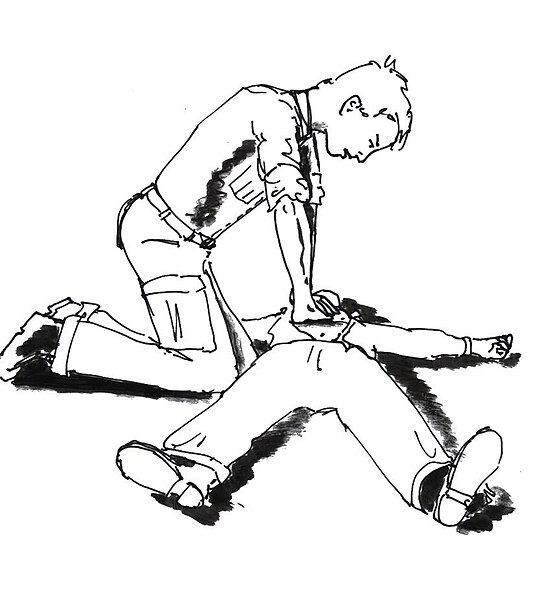
cardiopulmonary resuscitation (cpr)
noun
Emergency medical procedures for restoring normal heartbeat and breathing to victims of heart failure, drowning, etc.
Example: The patient had no pulse, so the paramedics performed cardiopulmonary resuscitation.
fr: réanimation cardiorespiratoire (RCR)
cerebral vascular accident
noun
A stroke, sometimes referred to as a cerebrovascular accident, is the rapid loss of brain function due to disturbance in the blood supply to the brain. This can be due to ischemia caused by a blockage, or a hemorrhage.
Example: The patient had difficulty speaking and raising his arms, he was having a cerebral vascular accident.
fr: accident vasculaire cérébral (AVC)
cervical collar
noun
A neck brace used to support a patient’s neck and head.
Example: Because of his spinal pain, the paramedics installed a cervical collar.
fr: collet cervical
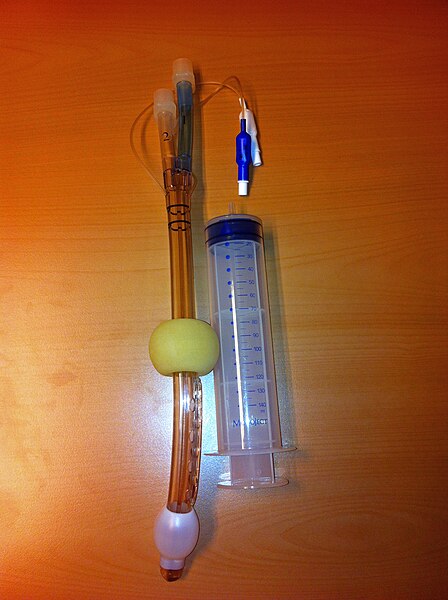
combitube
noun
A blind insertion airway device used in the pre-hospital and emergency setting. It is designed to provide an airway to facilitate the mechanical ventilation of a patient in respiratory distress.
Example: In order to protect the patient's airway, the paramedics intubated him with a combitube.
fr: combitube
convulsions
noun
It is a medical condition where body muscles contract and relax rapidly and repeatedly, resulting in an uncontrolled shaking of the body.
Example: The little boy is known to be epileptic, he is having convulsions.
fr: convulsions
defibrilator
noun
An apparatus used to control heart fibrillation by application of an electric current to the chest wall or heart.
Example: To resuscitate the patient, they had to use a defibrillator.
fr: défibrillateur
emergency
noun
A serious, unexpected, and often dangerous situation requiring immediate action.
Example: You must call 9-1-1 in case of emergency.
fr: urgence
epinephrine
noun
The commercial form of a hormone secreted by the adrenal medulla upon stimulation by the central nervous system in response to stress. It is used chiefly as a heart stimulant, to constrict the blood vessels, and to relax the bronchi in asthma.
Example: During anaphylactic shock, paramedics administered epinephrine to the patient.
fr: épinéphrine
paramedic
noun
A person trained to give emergency medical care to people who are injured or ill, typically in a setting outside of a hospital.
Example: In Quebec, paramedics work in teams in ambulances to care for sick or injured people.